
1. Nhanganyaya
The ACEMIC GT-5 is a portable digital wireless microphone system designed for instruments, particularly electric blowpipes, and stage performances. It features digital audio transmission, 16 selectable frequencies, and a digital ID code to prevent interference. This manual provides detailed instructions for setting up, operating, and maintaining your GT-5 system.

Mufananidzo 1.1: The ACEMIC GT-5 wireless microphone system, showing the transmitter (left) and the receiver (right). The transmitter features a 6.35mm plug, while the receiver has controls for power and frequency synchronization.
2. Package Zviri mukati
Ndokumbira utarise zvirimo pasuru kuti uone kuti zvinhu zvese zviripo:
- GT-5 Wireless Transmitter
- GT-5 Wireless Receiver
- Battery (Note: While the product specifications list a battery as an included component, some descriptions indicate it may not be included. Please verify upon receipt.)
3. Key Features
- Digital wireless audio transmission for clear sound.
- Pre-set 16 selectable frequencies to avoid interference.
- Digital ID code technology for robust signal integrity.
- Operating range of up to 40 meters (line-of-sight).
- Suitable for electric blowpipe, stagmitambo ye e, uye mitambo yemumugwagwa.
- Portable plug-on receiver, directly connects to mixers or active speakers.
- Lithium battery power supply for extended use.
4. Setup Instructions
4.1. Kuchaja Mabhatiri
Both the transmitter and receiver are powered by 3.7V lithium batteries. Ensure both units are fully charged before first use. Connect the appropriate charging cables (not specified in product details, assume standard USB charging) to a power source.
4.2. Kubatanidza Receiver
- Identify the receiver unit. It features a 6.35mm (1/4 inch) plug.
- Plug the receiver directly into the 6.35mm input jack of your mixer, amplifier, or active speaker. The receiver's plug can swivel for optimal positioning.

Mufananidzo 4.2.1: The GT-5 receiver connected to a mixer, demonstrating its plug-and-play functionality.
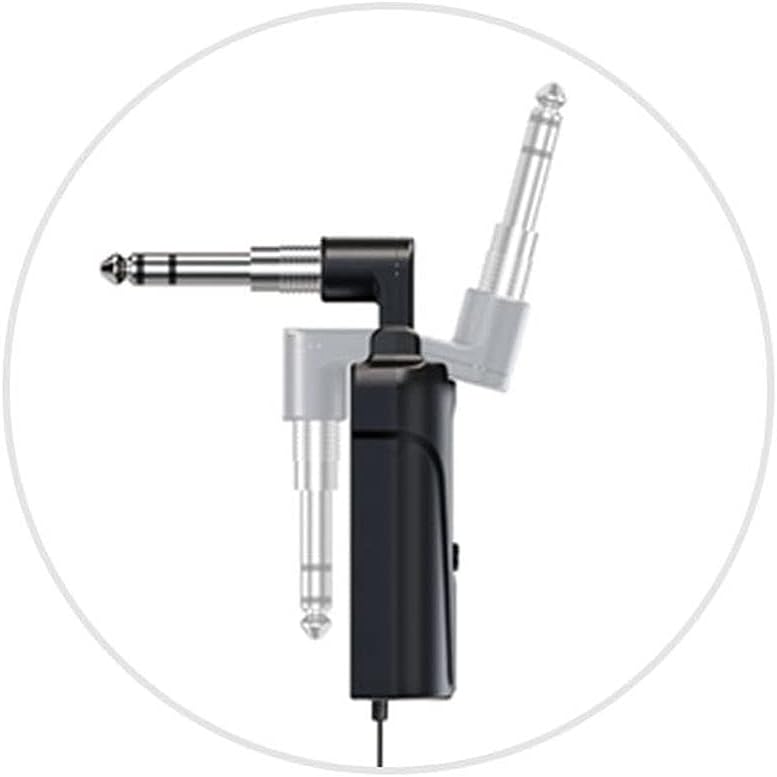
Mufananidzo 4.2.2: Detail of the receiver's swivel plug, allowing for flexible connection angles.
4.3. Kuisa Simba uye Kubatanidza
- Turn on the receiver by pressing its power button. The display should illuminate.
- Turn on the transmitter by pressing its power button.
- The system uses IR sync to download the frequency from the receiver to the transmitter. Ensure both units are in close proximity (within a few inches) and facing each other's IR windows (if present, otherwise ensure general proximity).
- Press the "SYNC" button on the receiver (or follow specific synchronization instructions if provided with the physical product) to initiate frequency pairing. The RF indicator on both units should show a stable connection once synchronized.
- If interference occurs, you can change the frequency. The system offers 16 selectable channels. Refer to the operating section for frequency adjustment.

Mufananidzo 4.3.1: The GT-5 transmitter attached to an electric blowpipe, ready for use.
5. Operating Instructions
5.1. Kushandisa Maikorofoni
Once the transmitter and receiver are synchronized, the system is ready for use. The transmitter is designed to be attached to an instrument, such as an electric blowpipe.
- Ensure the microphone is positioned correctly to capture the instrument's sound effectively.
- Monitor the audio output from your mixer/speaker to adjust volume levels as needed.
- Maintain a line-of-sight operating range of up to 40 meters between the transmitter and receiver for optimal signal quality. Obstacles can reduce this range.
5.2. Changing Frequencies
If you experience interference or need to operate multiple GT-5 systems simultaneously, you can change the operating frequency.
- On the receiver, use the channel selection buttons (usually labeled CHR or similar, or up/down arrows) to cycle through the 16 available frequencies.
- After selecting a new frequency on the receiver, perform the IR synchronization process again (as described in Section 4.3) to pair the transmitter with the new frequency.
6. Kuchengeta
- Kuchenesa: Use a soft, dry cloth to clean the exterior of the transmitter and receiver. Do not use liquid cleaners or solvents.
- Kuchengeta: Kana isiri kushandiswa, chengetedza hurongwa munzvimbo inotonhorera, yakaoma, kure nechiedza chezuva uye kupisa kwakanyanya.
- Battery Care: For optimal battery life, avoid fully discharging the batteries frequently. If storing for extended periods, charge the batteries to approximately 50% every few months.
- Dzivisa Unyoro: Protect the units from water and excessive humidity.
7. Kugadzirisa matambudziko
| Dambudziko | Zvinogona Kukonzera | Solution |
|---|---|---|
| Hapana inzwi rinobuda |
|
|
| Kupindira kana kusamira zvakanaka |
|
|
| Hupenyu hupfupi hwebhatiri |
|
|
8. Zvinotsanangurwa
General System Specifications:
- Frequency Range: Region dependent
- Audio Transmission: Digital wireless
- Audio Sampling Mode: 48KHz
- Selectable Frequencies: 16 pre-set channels
- ID Kodhi: Digital ID code for interference prevention
- Operating Range: Kusvika 40m (mutsetse wekuona)
- Magetsi: 3.7V Lithium battery (for both units)
Zvinodiwa Receiver:
- Modulation Mode: pi/4 DQPSK
- Latency: <6ms
- Frequency Mhinduro: 60Hz - 15KHz ± 2dB
- Total Harmonic Distortion: <0.8% (1KHz)
- Chiratidzo / Ruzha Ratio: >92dB
- Kugamuchira Sensitivity: -92dBm
- Zvakabuda: 6.35mm plug
- Kuramba Kushandisa: >6 maawa
- Dimensions: 185 x 20 x 10mm
Transmitter Specifications:
- Modulation Mode: pi/4 DQPSK
- Transmitter Power: 10mW
- Sensitivity: -47 dB ± 2dB
- Frequency Change: IR sync
- Mhando yemakrofoni: Condenser
- Maikorofoni Dimension: Φ14 x 5.0mm
- Kuramba Kushandisa: >6 maawa
- Dimensions: 125 x 40 x 20mm
9. Warranty uye Tsigiro
For warranty information and technical support, please refer to the documentation provided with your purchase or contact ACEMIC customer service directly. Keep your proof of purchase for warranty claims.