
Jebao EP6500
Jebao Jecob EP6500 DC Aquarium Return Pump Instruction Manual
Muenzaniso: EP-6500
Nhanganyaya
The Jebao Jecob EP6500 DC Aquarium Return Pump is designed for efficient and quiet water circulation in various aquatic environments. Featuring an LCD controller for adjustable speed and multiple operational modes, this pump is suitable for aquariums, ponds, fountains, sumps, and hydroponic systems. Its robust construction with a wear-resistant ceramic shaft ensures long-lasting performance in both fresh and saltwater applications.
This manual provides essential information for the safe and effective installation, operation, and maintenance of your EP6500 pump.
Key Features
- Manual Control System: Intuitive LCD display for easy operation.
- Kushandiswa Kwakasiyana-siyana: Supports bottom blowing, side draught, and dry use configurations.
- SINE Wave Technology: Ensures ultra-quiet operation for minimal disturbance.
- Kudzivirirwa Kwepamusoro: IC electronic detection for dry run and locked rotor protection, with automatic power-off upon no water detection.
- Durable Construction: Equipped with a wear-resistant ceramic shaft for extended operational life.
- Wide Application: Suitable for both salt water and fresh water environments.
Zvinotsanangurwa
| Attribute | Detail |
|---|---|
| Brand | Jebao |
| Model Number | E6500 |
| Color | Nhema |
| Material | Plastiki, Stainless Simbi |
| Zviyero zveChigadzirwa (L x W x H) | 20L x 13.4W x 12.7H Masendimita |
| Simba Source | DC (24 Volts) |
| Maximum Flow Rate | 1717 Gallons Per Minute (6500 LPH) |
| Kunonyanyisa vachisimudza Height | 14.7 Tsoka |
Package Zviri mukati
Iva nechokwadi chekuti zvese zvirimo uye zviri mumamiriro akanaka:
- Jebao Jecob EP6500 DC Aquarium Return Pump
- LCD Controller
- Power Adapter
- Various Hose Adapters (for different hose diameters)
- Intake Screens (for debris filtration)
- Bhuku reMirayiridzo

Image: All components of the Jebao Jecob EP6500 DC Aquarium Return Pump package, including the pump, controller, power supply, various hose adapters, and intake screens.
Setup uye Installation
1. Kubatanidza maAdapter eHose
- Select the appropriate hose adapter for your tubing diameter.
- Thread the chosen adapter onto the pump's outlet. Ensure a secure, watertight connection.
- Connect your water tubing to the adapter. Use a hose clamp (not included) for extra security if needed.

Image: Close-up of the pump's water outlet, showing the threaded connection for hose adapters.

Mufananidzo: Side view of the pump's water outlet, illustrating the secure attachment of a hose adapter.
2. Attaching Intake Screens
The pump comes with different intake screens to prevent debris from entering the impeller. Choose the screen suitable for your application (e.g., fine mesh for small debris, wider slots for larger debris).
- Attach the desired intake screen to the pump's inlet. Ensure it clicks securely into place.

Image: The Jebao Jecob EP6500 pump with a standard intake screen, designed for general debris filtration.
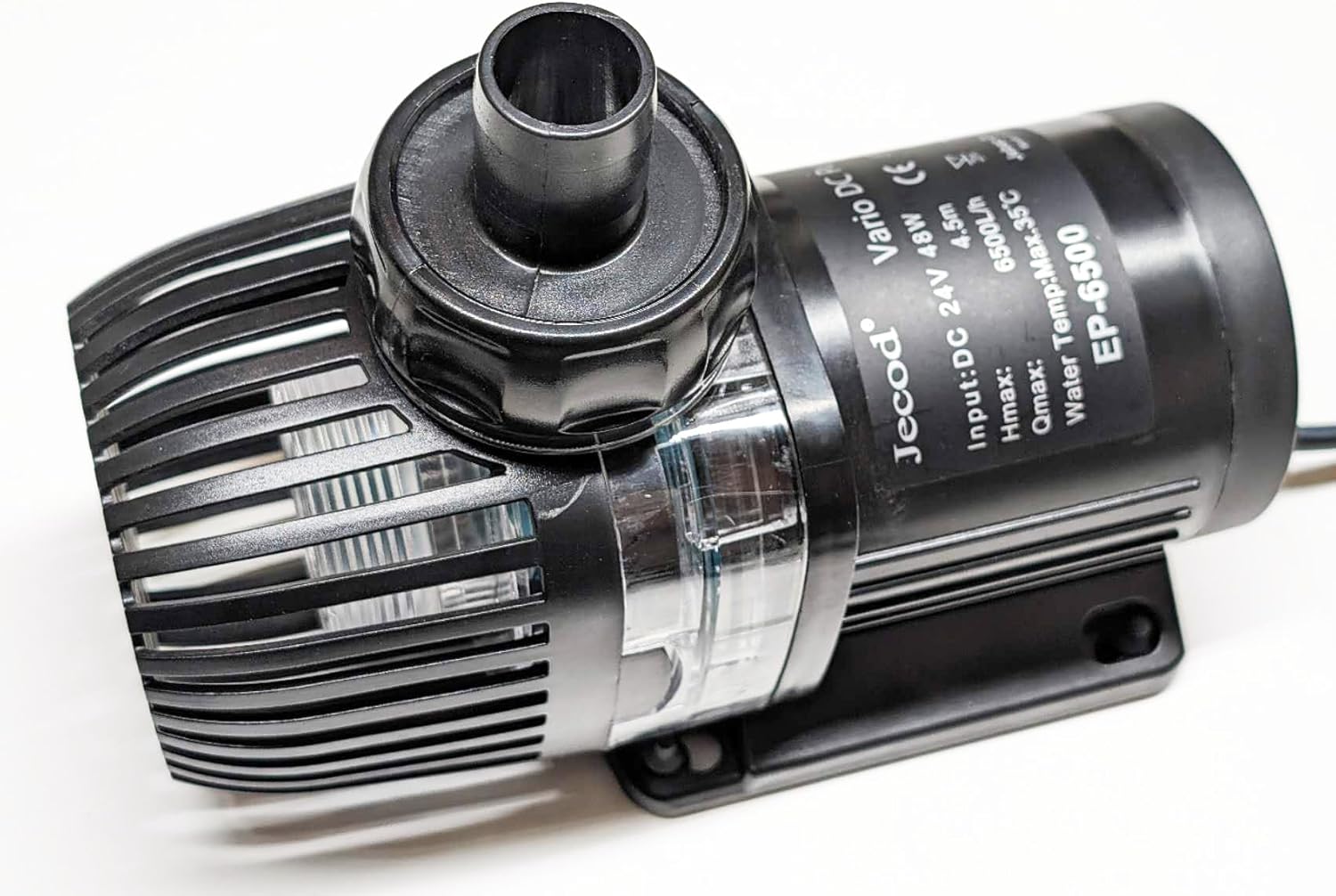
Image: The Jebao Jecob EP6500 pump featuring a side draught intake screen, suitable for low water level applications.
3. Connecting the Controller and Power
- Connect the pump cable to the LCD controller.
- Connect the power adapter to the LCD controller.
- Plug the power adapter into a properly grounded electrical outlet.
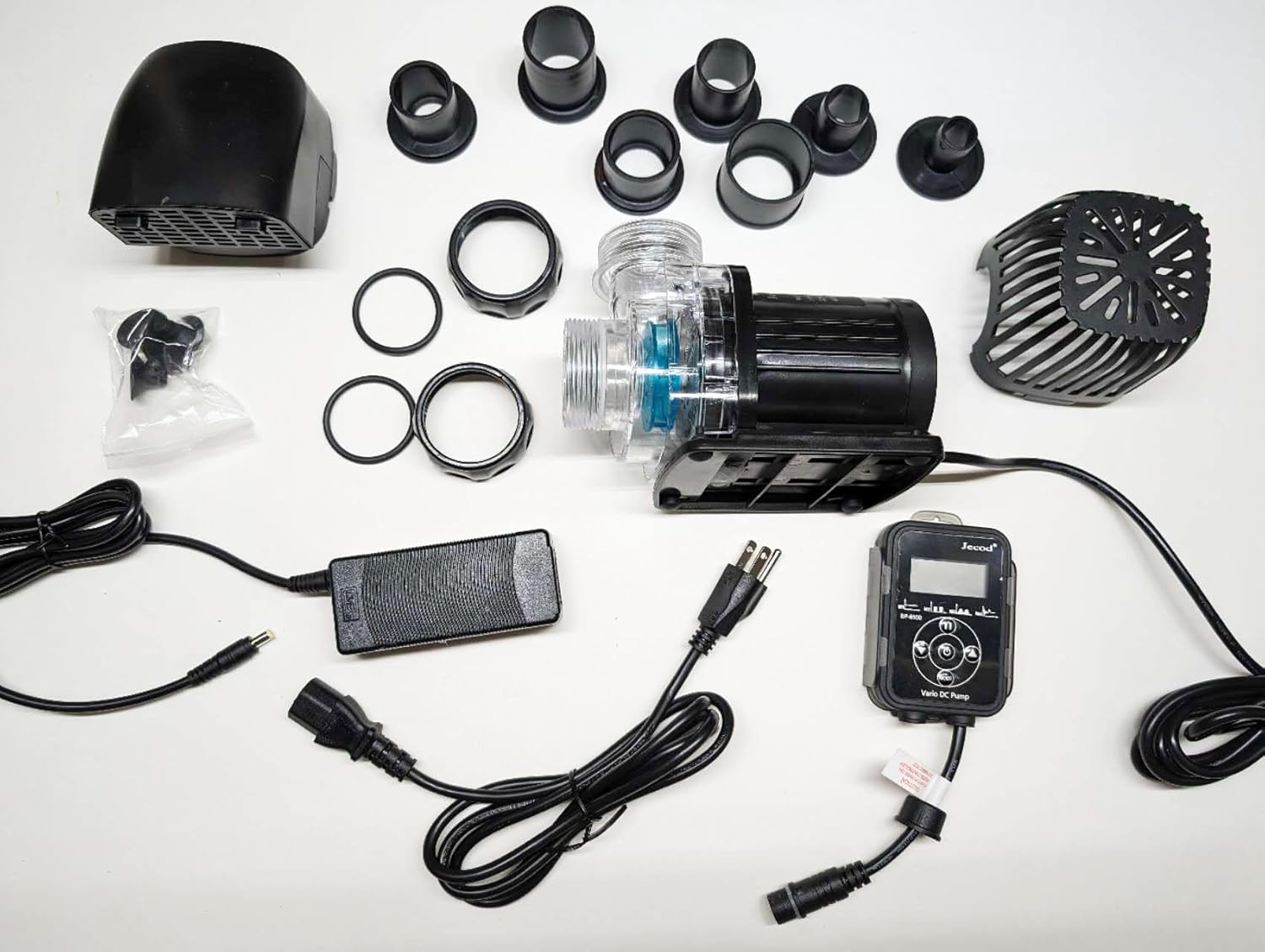
Image: The Jebao Jecob EP6500 pump and its LCD controller, showing the connection points.
4. Kugadzwa
- For submersible use, ensure the pump is fully submerged in water before plugging it in to prevent dry running.
- For dry use (external installation), ensure the pump is primed with water before starting.
- Position the pump on a stable, flat surface.
Video: Demonstrates the installation and operation of a similar DC aquarium pump, including speed adjustment, feed mode, and wave maker mode. This video is from JEREPOND, a seller of similar products.
Video: Illustrates the quiet operation, low water level use, flow rate adjustment, feed mode, memory function, and installation of a similar DC return pump. This video is from hygger, a seller of similar products.
Video: Shows the components, connections, and operation of a similar AQQA return pump, including assembly steps.
Operating Instruction
LCD Controller Functions
The LCD controller allows for precise control over the pump's operation:
- Bhatani reSimba: Turns the pump ON/OFF.
- Bhotani reMODE: Cycles through different operating modes (Constant Flow, Feed Mode, Wave Maker Mode).
- +/- Mabhatani: Adjust the flow rate or duration depending on the selected mode.
- Chiratidziro cheLCD: Shows current mode, flow rate, or timer settings.
Operating Modes
- Constant Flow Mode: Adjust the flow rate from minimum to maximum using the +/- buttons. The display will show the current power level.
- Feed Mode: Activates a temporary pause in pump operation for feeding fish or other aquatic life. Press the MODE button to enter Feed Mode, and use +/- to set the duration of the pause (e.g., 10, 20, or 30 minutes). The pump will resume normal operation automatically after the set time.
- Wave Maker Mode: Creates oscillating water flow to simulate natural wave patterns. Use the +/- buttons to adjust the intensity or frequency of the waves.
Video: Demonstrates the constant flow, wave maker, feed mode, dry run protection, and memory function of a similar AQQA multifunctional return pump.
Video: Shows the connections, constant flow, wave maker, feed mode, dry run protection, and memory function of a similar AQQA aquarium water pump with controller.
Maintenance
Kugadziriswa nguva dzose kunoita kuti pombi yako ishande zvakanaka uye igare kwenguva refu.
1. Cleaning the Impeller and Intake Screens
- Bvisa pombi kubva pachitubu chemagetsi.
- Remove the intake screen by gently twisting or unclipping it.
- Carefully remove the impeller cover and then the impeller itself.
- Clean the impeller and its housing with a soft brush and fresh water to remove any debris or mineral buildup.
- Clean the intake screen.
- Reassemble all parts in reverse order, ensuring they are securely fitted.
2. Preventing Dry Running
The pump features IC electronic detection to prevent dry running. However, always ensure the pump is fully submerged or properly primed before operation to avoid unnecessary wear and tear.
Kugadzirisa matambudziko
| Dambudziko | Zvinogona Kukonzera | Solution |
|---|---|---|
| Pombi isiri kumhanya | No power, clogged impeller, dry run protection activated. | Check power connection, clean impeller, ensure pump is submerged/primed. |
| Kuderera kwekuyerera | Clogged intake screen/impeller, kinked tubing, incorrect flow setting. | Clean intake/impeller, check tubing for obstructions, adjust flow rate on controller. |
| Ruzha rusina kujairika | Debris in impeller, worn impeller, pump not stable. | Clean impeller, inspect for damage, ensure stable placement. |
| Error message on LCD | Specific error code (e.g., dry run, locked rotor). | Refer to the controller's specific error code guide in the full manual for detailed solutions. Generally, check for obstructions or water levels. |
Warranty uye Support
For warranty information, technical support, or replacement parts, please refer to the contact information provided with your purchase or visit the official Jebao website. Chengetedza humbowo hwako hwekutenga kune warranty claim.