Nhanganyaya
This manual provides detailed instructions for the assembly, operation, and maintenance of your new Generic Portable Fabric Wardrobe. Please read these instructions carefully before beginning assembly to ensure correct setup and safe use of the product. This wardrobe is designed to provide a convenient and organized storage solution for clothing, shoes, and other items.
Safety Information
- Iva nechokwadi chekuti zvese zvirimo uye hazvina kukuvara usati wagadzira. Usashandise kana paine zvimwe zvikamu zvisipo kana kuti zvakatyoka.
- Assemble the wardrobe on a flat, stable surface to prevent tipping.
- Do not overload the wardrobe. Refer to the "Specifications" section for load-bearing capacities.
- Chengeta zvidimbu zvidiki kure nevana panguva yekuunganidza kuti vasazodzipwa.
- Avoid placing heavy objects on top of the wardrobe that exceed its stated capacity.
- Do not climb on or hang from the wardrobe structure.
Package Zviri mukati
Before assembly, verify that all the following components are included in your package:
- 1x Fabric Wardrobe Cover (Oxford cloth)
- Thickened Steel Pipes (various lengths for frame)
- Full Alloy Steel Joints (connectors)
- Shelving Fabric (for internal shelves)
- Hanging Rods
- Gungano Chinyorwa

Image: Various components of the wardrobe, including steel pipes and alloy connectors, ready for assembly.
Setup uye Assembly
Assembly of this fabric wardrobe is designed to be straightforward and requires no special tools. Please follow these steps:
- Unpack Components: Carefully remove all parts from the packaging and lay them out on a clean, flat surface. Identify the different lengths of steel pipes and the alloy joints.
- Gadzira Base Frame: Connect the shortest steel pipes with the alloy joints to form the rectangular base of the wardrobe. Ensure all connections are secure.
- Isa Vertical Inotsigira: Insert the longer vertical steel pipes into the base frame's joints.
- Add Shelving Frames: As you build upwards, insert the appropriate steel pipes and fabric shelves to create the desired shelving structure. The fabric shelves should be stretched taut over the pipe frames.
- Isa Hanging Rods: Secure the hanging rods into the designated alloy joints at the appropriate height for clothing.
- Complete Top Frame: Connect the remaining steel pipes and alloy joints to form the top frame of the wardrobe.
- Batanidza Chifukidziro Chejira: Carefully drape the Oxford cloth cover over the assembled frame. Ensure the zippers and curtain openings align correctly with the wardrobe structure.
- Kuongorora Kwekupedzisira: Verify that all pipes are securely inserted into the joints and the frame is stable.

Image: The fully assembled fabric wardrobe, illustrating its overall dimensions and structure.
Operating Instruction
Your fabric wardrobe is designed for easy and versatile storage:
- Hembe Dzakarembera: Utilize the integrated hanging rods for shirts, garments, and other items that require hanging. Ensure clothes are evenly distributed to prevent excessive strain on one section.
- Shelf Storage: The internal shelves provide space for folded clothes, shoes, bags, or storage boxes. Distribute weight evenly across shelves.
- Dust-Proof Cover: Close the curtain-style cover and use the zippers to fully enclose the wardrobe, protecting contents from dust and dirt.
- Top Storage: The top surface of the wardrobe can be used for lightweight storage, such as bedding or infrequently used items, within the specified load limits.
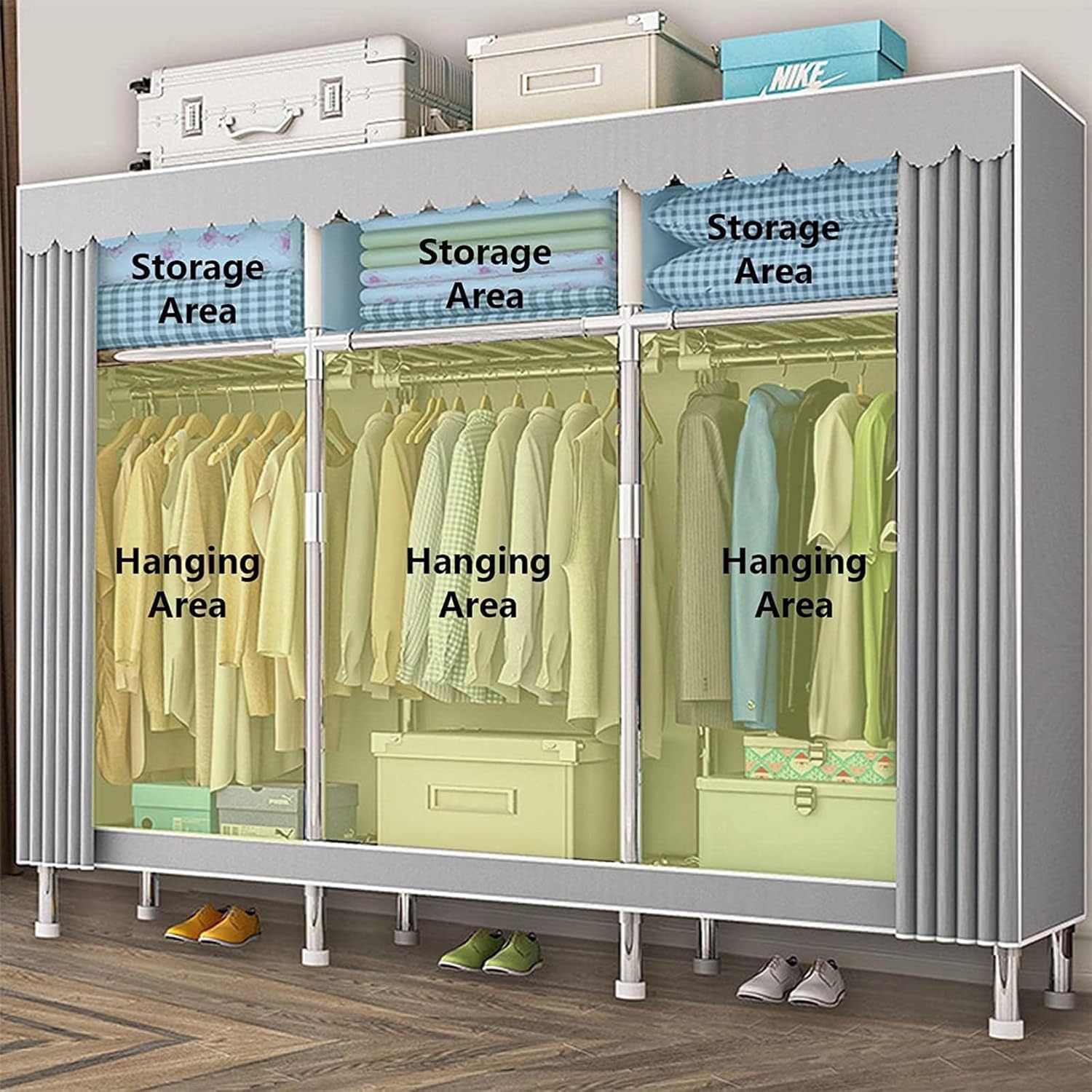
Mufananidzo: Yemukati view of the wardrobe highlighting designated hanging areas and storage shelves for organized use.

Mufananidzo: Zvakadzama view of the wardrobe's features, including the double curtain, thick Oxford fabric, and dust-proof design for protection.
Maintenance
To ensure the longevity and cleanliness of your fabric wardrobe:
- Kuchenesa Kavha: The Oxford cloth cover is washable. For light cleaning, wipe with a damp cloth. For deeper cleaning, remove the cover from the frame and hand wash with mild detergent, then air dry completely before reattaching.
- Frame Inspection: Periodically check all steel pipe connections and alloy joints to ensure they remain secure. Tighten if necessary.
- Dzivisa Harsh Chemicals: Do not use abrasive cleaners or harsh chemicals on the fabric cover or steel frame, as this may cause damage or discoloration.

Image: A close-up demonstrating the wear-resistant and waterproof properties of the Oxford fabric used for the wardrobe cover.
Kugadzirisa matambudziko
If you encounter any issues with your fabric wardrobe, consider the following:
- Kusagadzikana: Ensure all pipes are fully inserted into the alloy joints. Check that the wardrobe is placed on a level surface. Redistribute contents if weight is unevenly distributed.
- Dambudziko Kuunganidza: Review the assembly steps carefully. Ensure you are using the correct pipe lengths for each section. Do not force connections; if a part does not fit, re-check the manual.
- Mazipu Anonamira: Apply a small amount of zipper lubricant or a graphite pencil to the zipper teeth to improve movement.
For further assistance, please refer to the "Support" section.
Zvinotsanangurwa
| Feature | Detail |
|---|---|
| Zviyero zveChigadzirwa (L x W x H) | 126 masendimita x 46 masendimita x 173 masendimita (49.6 mu x 18.1 mu x 68.1 mukati) |
| Fabric Material | Oxford Mucheka |
| Pipe Material | Thickened Steel Pipe |
| Pipe Diameter | 20 mm |
| Steel Pipe Interface Material | Full Alloy Steel Joint |
| Total Load-Bearing Capacity | 800 kg (inenge 1760 lbs) |
| Partition Shelf Load-Bearing Capacity | 90 kg (inenge 198 lbs) |
| Clothes Hanging Rod Load-Bearing Capacity | 75 kg (inenge 165 lbs) |
| Gungano Rinodiwa | Ehe |
| Dust-Proof Cover | Yes, with zippers |

Image: A demonstration of the robust load-bearing capability of the alloy steel joints, shown supporting a significant weight.
Support
If you have any questions regarding the assembly, operation, or maintenance of your Generic Fabric Wardrobe that are not covered in this manual, please do not hesitate to contact our professional support team. We are available to assist you with any inquiries.
Contact information is typically provided by the seller at the point of purchase or on the product packaging.