1. Nhanganyaya
This manual provides important information regarding the installation, operation, and maintenance of your Generic Portable Carbon Monoxide Detector, Model JSN-997. This device is designed to detect carbon monoxide (CO) gas and alert you to potentially dangerous levels, helping to protect your family from the invisible threat of CO poisoning. Please read this manual thoroughly before using the detector and retain it for future reference.
2. Safety Information
Carbon monoxide (CO) is a colorless, odorless, and tasteless gas that can be fatal. This detector is designed to alert you to the presence of CO. However, it is not a substitute for proper maintenance of fuel-burning appliances or ventilation systems.
Yakakosha Yambiro Yekuchengetedza:
- UL 2034 Kutevedza: This carbon monoxide alarm is rigorously tested and certified to meet UL 2034 standards for reliable detection.
- Do Not Obstruct: Ensure the detector's vents are not blocked by furniture, curtains, or other objects.
- Kuedza: Do not use gas or any other substance to directly blow into the detector's sensing hole when testing. Use the designated test button.
- Alarm Mhinduro: If the alarm sounds, immediately move to fresh air, call emergency services, and do not re-enter the premises until it has been deemed safe by professionals.
Understanding CO Dangers:
Carbon monoxide exposure can lead to various health effects depending on concentration and exposure time. The detector is programmed to alarm at specific CO levels and durations:
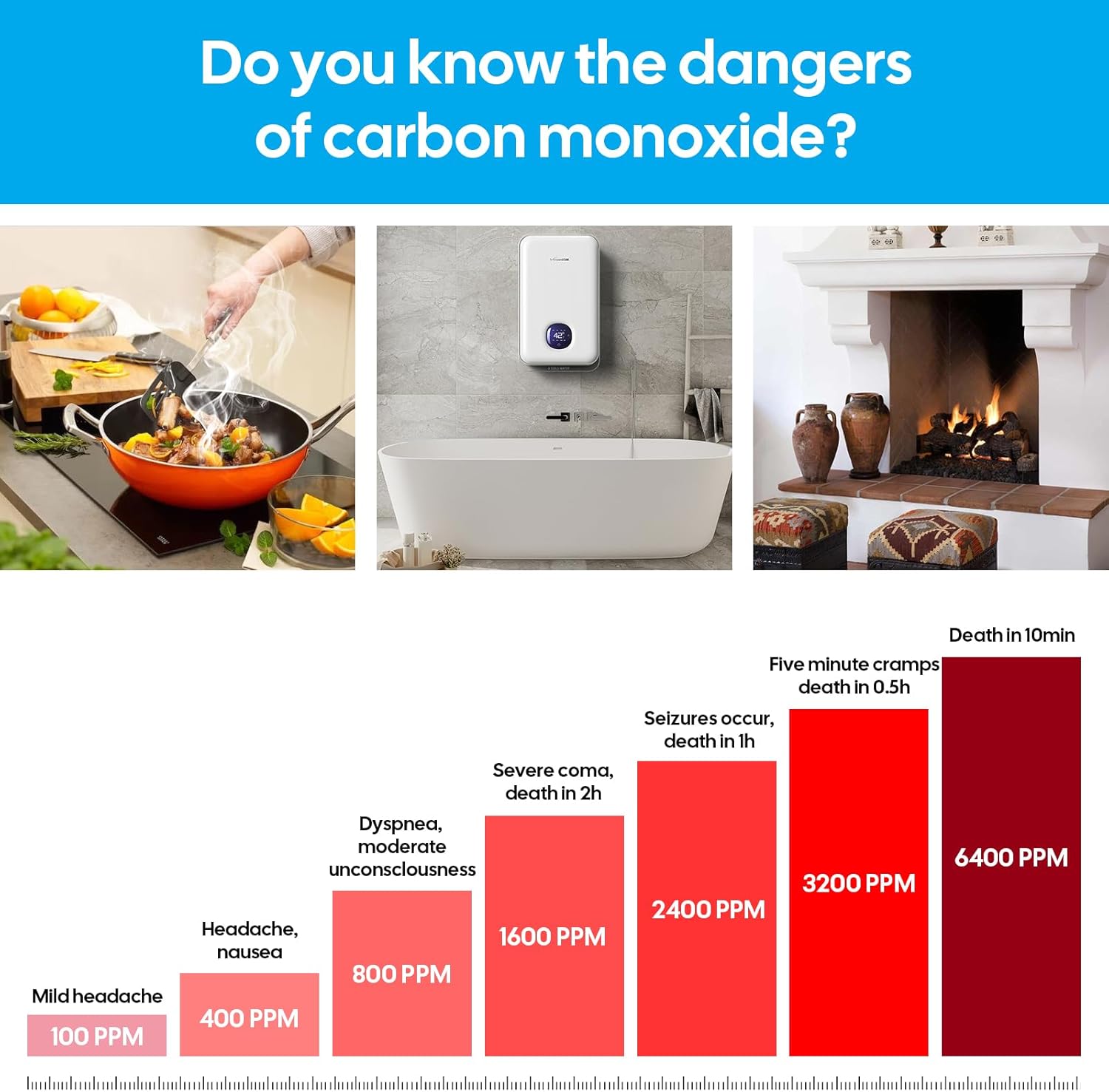
This image illustrates the CO concentration levels and the corresponding timeframes within which the alarm will be triggered.

This infographic highlights the potential health effects of carbon monoxide exposure at various concentrations.
3. Zvigadzirwa zveChigadzirwa
- Sensor yeElectrochemical Yepamusoro: Ensures accurate and reliable CO level monitoring.
- LCD Digital Display: Shows real-time CO concentration (PPM) and temperature.
- Alarm Inonzwika Inonzwika: 85-decibel alarm activates upon detection of dangerous CO levels.
- Visual Alerts: Flashing LED lights accompany the audible alarm.
- Bhatani rekuyedza/Kuisa patsva: Easy operation for testing the alarm and resetting it.
- Battery Powered: Operates on 2 x 1.5V AAA batteries (not included), ensuring continuous monitoring even during power outages.
- Inotakurika uye Compact Dhizaini: Allows for flexible installation anywhere in your home or office.
- UL 2034 Certified: Meets high safety standards for carbon monoxide alarms.

This image highlights the display, test/reset button, and alarm light on the detector.
4. Setup uye Kuiswa
Kuisa Battery:
- Unscrew the battery cover located on the back of the detector.
- Insert 2 x 1.5V AAA batteries (not included), ensuring correct polarity (+ and -).
- Tsiva iyo bhatiri kavha uye chengetedza iyo.

This image illustrates the battery installation process and the initial power-up sequence.
Kutanga Simba-Up:
After battery installation, the detector will perform a self-test. The red, green, and yellow lights will flash in sequence, followed by a 33-second countdown. The display will then go out, indicating the device is ready for operation.
Inokurudzirwa Kuiswa:
For optimal protection, it is recommended to install a CO detector on each level of your home and in each bedroom. Consider placing detectors near sleeping areas and areas where fuel-burning appliances are located. The detector can be mounted on a wall or placed on a flat surface.
This image shows recommended top or side mounting and highlights key features.

This image demonstrates the versatility of placement to protect every corner of the home.
5. Operating Instructions
Normal Operation:
During normal operation, the detector continuously monitors CO levels. The LCD digital display will show the current CO concentration in parts per million (PPM) or temperature. A green light will flash approximately every 30 seconds to indicate proper functioning.
Kuedza Detector:
Regular testing ensures your detector is functioning correctly. Press the Test/Reset button firmly. The screen will light up, the red light will flash, and the alarm will sound. This confirms the alarm and display are working. The screen will then go off, and the green light will resume flashing every 30 seconds.

Press the test button to verify alarm functionality.
Alarm Indicators:
The detector uses visual indicators to communicate its status:
- Green Light: Indicates power and normal operation.
- Chiedza Chitsvuku: Indicates a CO alarm condition.
- Yellow Light: Zvinoratidza kuti bhatiri rayo harina kushanda zvakanaka kana kuti harina kushanda zvakanaka.

Visual indicators for Power, Alarm, and Fault status.
6. Kuchengeta
Nguva Dzose Kuedzwa:
Test your CO detector weekly by pressing the Test/Reset button to ensure the alarm and display are functioning correctly.
Kutsiva Bhatiri:
When the batteries are low, the yellow fault light may illuminate, and the detector might emit a chirp. Replace both AAA batteries promptly following the instructions in Section 4.1.
Kuchenesa:
Gently clean the exterior of the detector with a soft, damp cloth. Do not use harsh chemicals or abrasive cleaners. Do not paint the detector, as this can interfere with the sensor's operation.
7. Kugadzirisa matambudziko
| Dambudziko | Zvinogona Kukonzera | Solution |
|---|---|---|
| Alarm inorira nguva dzose kana kuti nguva nenguva. | Kuwanda kweCO kwakawanikwa. | Pakarepo enda kumhepo itsva. Fonera emergency emergency. Usapindezve kusvika zvakachengeteka. |
| Yellow light flashes or detector chirps. | Bhatiri rakaderera. | Replace both 1.5V AAA batteries. |
| Yellow light flashes continuously (no chirp). | Sensor fault or device malfunction. | Press the Test/Reset button. If the fault persists, the unit may need replacement. |
| Hapana chiratidziro kana mwenje. | Hapana simba kana mabhatiri akafa. | Ensure batteries are correctly installed and fully charged. Replace if necessary. |
8. Zvinotsanangurwa
- Model Number: JSN-997
- Brand: Generic
- Style: CO Detector Alarm
- Kunobva Simba: Mabhatiri maviri e1.5V AAA (haana kubatanidzwa)
- Alamu: Audible (85 dB)
- Material: High-grade ABS material
- Zviyero zvechigadzirwa: 0.98"D x 2.36"W x 2.36"H
- Chinhu Weight: Inenge 4.8 ounces (0.3 Pounds)
- Mugadziri: Shenzhen Lidingfeng Technology CO., Ltd

This image provides the physical dimensions of the detector.
9. Warranty uye Tsigiro
Specific warranty information for this Generic product (Model JSN-997) is not provided in the product details. For warranty inquiries or technical support, please contact the seller or the manufacturer, Shenzhen Lidingfeng Technology CO., Ltd, directly through your purchase platform or their official contact channels.


