1. Nhanganyaya
This manual provides detailed instructions for the safe and effective use of the SMART SENSOR AS8805 Digital Sulfur Dioxide Gas Monitor. This device is designed for high-sensitivity detection of sulfur dioxide (SO2) gas, featuring sound and light alarms, and a rechargeable Li-battery for portable operation. Please read this manual thoroughly before operating the device and retain it for future reference.
2. Safety Information
Gara uchitevera kune anotevera ekuchengetedza ekudzivirira kudzivirira kukuvara kana kukuvara kune mudziyo:
- Usaedze kugadzirisa kana kubvisa mudziyo.
- Ensure the device is used within its specified operating temperature and humidity ranges.
- Chengetedza mudziyo kure neminda yakasimba yemagetsi.
- Gara uchitarisa mudziyo kuona chero zviratidzo zvekukuvara kana kusashanda.
- Perform zero calibration in a clean air environment, free from SO2 or other interfering gases.
- Recharge the battery promptly when the low power indicator is active to maintain optimal performance and safety.
- This device is designed for detecting SO2 gas. Do not use it for other gas types without proper calibration and verification.
3. Chigadzirwa Pamusoroview
The SMART SENSOR AS8805 is a compact and portable sulfur dioxide gas detector. Familiarize yourself with its components:

Mufananidzo 3.1: Mberi View of the AS8805 Detector. This image shows the front of the device, highlighting the digital LCD display, power on/off key, up key (addition), down key (subtraction), and enter key. The alarm light is visible at the top left, and the sulfur dioxide gas sensor is at the top right.
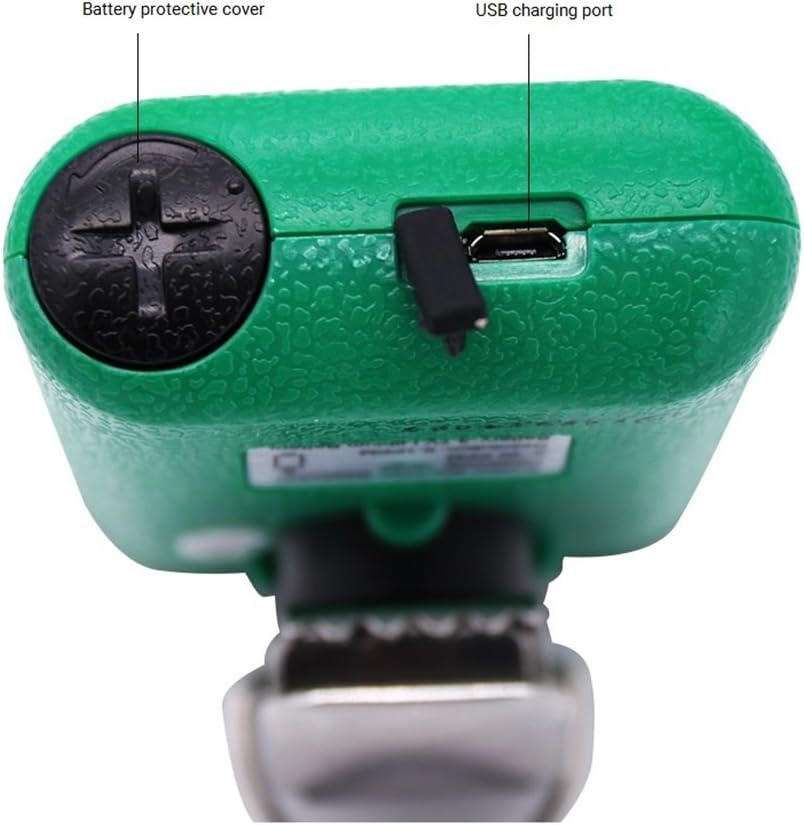
Mufananidzo 3.2: Pamusoro View of the AS8805 Detector. This image displays the top section of the device, indicating the battery protective cover and the USB charging port.

Mufananidzo 3.3: Rutivi View of the AS8805 Detector. This image illustrates the side of the device, pointing out the gas sensor inside and the alarm light.
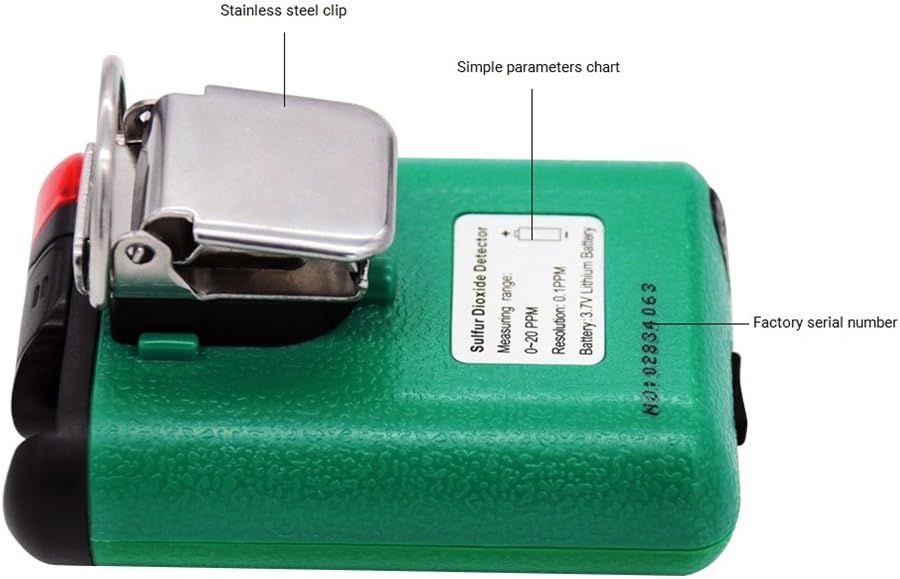
Mufananidzo 3.4: Kudzoka View of the AS8805 Detector. This image shows the back of the device, featuring the stainless steel clip, a simple parameters chart, and the factory serial number.
3.1 Zvikamu Zvikuru
- Sulfur Dioxide Gas Sensor: Detects SO2 concentration in the air.
- Alarm Light: Provides visual indication during an alarm event.
- Digital LCD Ratidza: Shows real-time gas concentration, battery status, and other operational information.
- Power On/Off Key: Inoshandiswa kubatidza kana kudzima mudziyo.
- Up Key (Addition): Used for navigating menus or increasinkukosha kwe g.
- Down Key (Subtraction): Used for navigating menus or decreasinkukosha kwe g.
- Enter Key: Used to confirm selections or enter menus.
- Battery Protective Cover: Secures the internal battery.
- USB kuchaja Port: For recharging the device's internal Li-battery.
- Chivharo cheSimbi Isina Kushanda: Allows for convenient carrying and attachment.
4. Setup
4.1 Unboxing uye Package Zviri mukati
Carefully unpack the device and verify that all standard accessories are present:

Figure 4.1: Standard Package Contents. This image shows the items included in the standard package: the AS8805 gas monitor, power charger and cable, user manual, explosive-proof certificate, certificate of calibration, and warranty card.
- 1x Sulfur Dioxide Gas Monitor (AS8805)
- 1x Chinyorwa cheMushandisi
- 1x Explosive-proof Certificate
- 1x Warranty Card
- 1x Power Charger
- 1x Power Cable
4.2 Kuchaja Bhatiri
The device is powered by a 3.7V Li-battery. Before first use, or when the low power indicator appears, charge the device:
- Connect the provided power cable to the USB charging port on the top of the device (refer to Figure 3.2).
- Connect the other end of the cable to the power charger, and then plug the charger into a suitable power outlet.
- The battery icon on the LCD display will indicate charging status.
- A full charge typically allows for approximately 60 hours of continuous operation without alarms.
4.3 Kutanga Simba-Kubatidza
Kuti uise simba pachigadzirwa:
- Dzvanya uye ubate iyo Power On/Off Key until the display illuminates.
- The device will perform a self-test and warm-up sequence. During this time, the display may show various readings before settling.
5. Kushanda
5.1 Simba On/Kudzima
- Power On: Dzvanya uye ubate iyo Power On/Off Key for a few seconds until the display turns on.
- Power Off: Dzvanya uye ubate iyo Power On/Off Key for a few seconds until the display turns off.
5.2 Ratidza Ruzivo
The digital LCD display shows the following information:
- Real-time SO2 Concentration: Displayed in parts per million (ppm).
- Chiratidzo cheBattery Status: Inoratidza huwandu hwekuchaja kwebhatiri huripo.
- Alarm Indicators: Visual cues for high or low alarm conditions.
5.3 Alarm Functions and Settings
The device features adjustable high and low alarm values with three alarm methods: sound, light, and vibration. The alarm sound can reach up to 80dB.
- Default High Alarm: 10.0 ppm
- Default Low Alarm: 5.0 ppm
To adjust alarm values:
- With the device powered on, press the Up Kiyi or Pasi Kiyi to enter the password interface.
- Enter the password (e.g., "123" as shown in the calibration video, though specific password should be confirmed in the full user manual). Use the Up uye Down Keys to change digits and the Enter Key to move to the next digit or confirm.
- After entering the correct password, navigate through the menu using the Up uye Down Keys to find the alarm setting options.
- Adjust the high and low alarm thresholds as required using the Up uye Down Keys, and confirm each setting with the Enter Key.
5.4 Zero Calibration
Zero calibration ensures accurate readings by setting the baseline in a clean air environment. This procedure should be performed regularly or if you suspect inaccurate readings.
- Ensure the device is in a clean environment, free from any SO2 gas.
- Simba pachigadzirwa.
- Access the calibration menu by pressing the Up Kiyi or Pasi Kiyi to enter the password interface.
- Enter the password (e.g., "123").
- After successful password entry, navigate to the calibration option (often labeled "CAL" or "ZERO CAL").
- Confirm the zero calibration selection with the Enter Key. The device will then perform the zero calibration, displaying a changing number as it stabilizes.
- Wait for the device to stabilize and confirm the calibration. The display may show "F" or return to 0.0 ppm, indicating successful calibration.
5.5 Auto/Hand Power Off Function
The device includes an auto power-off feature to conserve battery life. This can be set manually.
- Auto Power Off: If enabled, the device will automatically turn off after 10 minutes of no operation.
- Refer to the full user manual for specific instructions on how to enable or disable the auto power-off function.
6. Kuchengeta
6.1 Kuchengeta Battery
- Recharge the 3.7V Li-battery when the low power indicator is displayed.
- Dzivisa kupedza simba rebhatiri nguva nenguva kuti rirambe richirarama kwenguva refu.
- Shandisa charger netambo yakapihwa chete.
6.2 Sensor Life
The electrochemical sensor has an estimated life of 2 years. After this period, the sensor's accuracy may degrade, and replacement or professional calibration may be required.
6.3 Kuchenesa
- Wipe the device exterior with a soft, damp jira.
- Usashandise abrasive cleaners kana solvents.
- Ensure no liquid enters the sensor opening or charging port.
7. Kugadzirisa matambudziko
| Dambudziko | Zvinogona Kukonzera | Solution |
|---|---|---|
| Mudziyo haubatike. | Bhatiri rakaderera kana rapera. | Chaja mudziyo uchishandisa charger yakapihwa netambo. |
| Kurava kusina kururama. | Sensor requires zero calibration; sensor lifespan exceeded. | Perform zero calibration in clean air. If issues persist, consider sensor replacement or professional service. |
| Alarm inorira nguva dzose. | High SO2 concentration detected; alarm settings too low. | Evacuate the area and ventilate. Check and adjust alarm thresholds if necessary. |
| Chiratidziro hachina chinhu kana kuti chakaomeswa nechando. | Software error or battery issue. | Try restarting the device. If problem persists, contact support. |
8. Zvinotsanangurwa
| Feature | Detail |
|---|---|
| Product Model Number | AS8805 |
| Gas Measurement Type | Sulphur yakasviba (SO2) |
| Measuring Range | 0 ~ 20 ppm |
| Testing Resolution | 0.1 ppm |
| Kuyera Nheyo | Electrochemical |
| Sensor Hupenyu | 2 years |
| Yakaderera/Yakakwirira Alarm | Supported, adjustable values |
| Alarm Methods | Inzwi, Chiedza, Vibration |
| Alarm Sound Level | Kusvika ku80 dB |
| Operating Temperature | -10 ~ 50 ℃ (14 ~ 122 ℉) |
| Kushanda Humidity | 15 ~ 95% RH (Standard) |
| Bhatiri Type | 3.7V Li-battery (754060p) |
| Bhatiri Kushanda Nguva | Approx. 60 hours (no alarm) |
| Auto Power Off | Yes (after 10 minutes of no operation, if enabled) |
| Chigadzirwa Net Weight | 200g (7.1 ounces) |
| Kukura Kwechigadzirwa | 120 * 65 * 38 mm |
| UPC | 785197913523 |
9. Warranty uye Tsigiro
The SMART SENSOR AS8805 Digital Sulfur Dioxide Gas Monitor comes with a warranty as detailed in the included Warranty Card. Please refer to the card for specific terms and conditions.
For technical support, service, or inquiries regarding your device, please contact your retailer or the manufacturer directly. Keep your purchase receipt and warranty card handy when seeking support.


