Nhanganyaya
This manual provides essential information for the safe and efficient operation of your Nedis UPSD2000VBK Uninterruptible Power Supply. Please read these instructions carefully before installation and use, and retain them for future reference. This UPS is designed to provide backup power and protect your electronic devices from power outages, surges, and fluctuations.
Mirayiridzo Yekuchengetedza
- Indoor Use Chete: This UPS is designed for indoor use in a controlled environment. Do not expose it to rain, snow, or direct sunlight.
- Kufefetedza Ensure adequate ventilation around the UPS. Do not block ventilation openings. Maintain at least 20 cm of clearance from walls or other obstructions.
- Kunobva Simba: Connect the UPS to a properly grounded AC power outlet. Do not remove the grounding prong.
- Overload: Do not overload the UPS. The total power consumption of connected equipment must not exceed the UPS's rated capacity (1200 W).
- Kuchengetedzwa kweBhatiri: The UPS contains internal batteries. Do not attempt to open the UPS casing or service the batteries yourself. Refer all servicing to qualified personnel.
- Liquid Contact: Avoid placing liquids on or near the UPS. In case of accidental spillage, immediately disconnect the UPS from the power source and contact support.
- Emergency Disconnect: Ensure the AC power outlet for the UPS is easily accessible for quick disconnection in an emergency.
Product Overview
The Nedis UPSD2000VBK is a compact and efficient uninterruptible power supply. Familiarize yourself with its components before proceeding with installation.

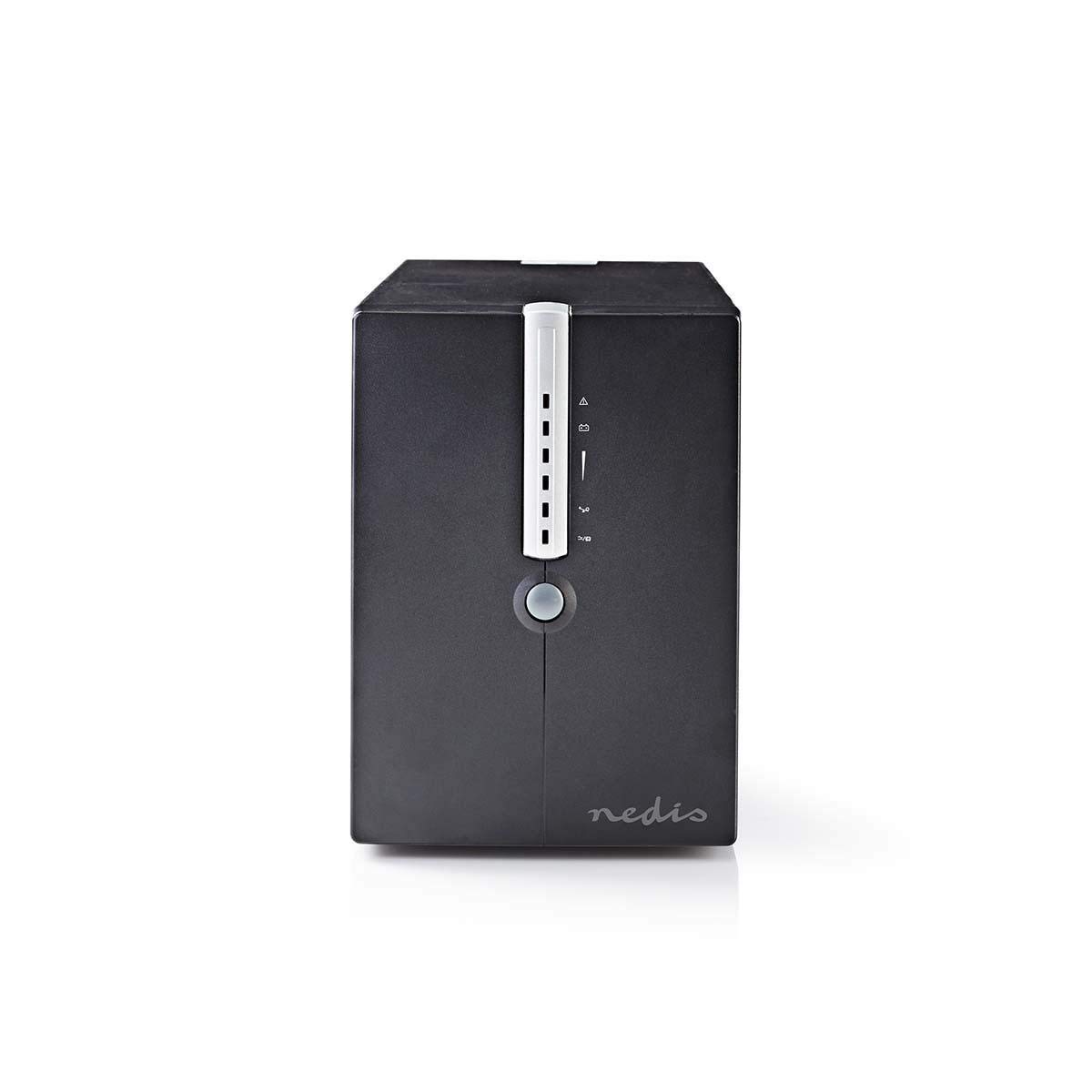
Mufananidzo 1: Mberi nedivi view of the Nedis UPSD2000VBK. This image displays the main power button and the vertical strip of LED indicators on the front panel, along with ventilation grilles on the side.
Mufananidzo 2: Rear view of the Nedis UPSD2000VBK. This image highlights the four power outlets, the USB communication port, and the RJ45 network protection ports (IN/OUT), along with the main power input and cooling fan.
Zvikamu Zvikuru:
- Front Panel: Power button, LED status indicators (AC mode, battery mode, fault, battery level).
- Rear Panel: AC input, 4 x Schuko output sockets, USB communication port, RJ45 network protection ports (IN/OUT).
- Zvemukati: Sealed lead-acid batteries, inverter, charger, control circuitry.
Gadzirira
1. Kusunungura
- Carefully remove the UPS from its packaging.
- Inspect the unit for any shipping damage. If damage is found, do not operate the unit and contact your dealer.
2. Kugadzwa
- Place the UPS on a flat, stable surface in a well-ventilated area.
- Avoid locations with excessive dust, humidity, or extreme temperatures.
- Ita shuwa kuti tembiricha yemhepo iri pakati pe0°C ne40°C (32°F ne104°F).
3. Kubatanidza Zvishandiso
- Connect the UPS power cord to a grounded wall outlet.
- Plug your computer, monitor, and other critical devices into the output sockets on the rear of the UPS. Ensure the total load does not exceed 1200 W.
- Sarudzo: Connect a USB cable from the UPS to your computer for monitoring software functionality (software not included, typically available from manufacturer's websaiti).
- Sarudzo: Connect network cables through the RJ45 IN/OUT ports to protect your network devices from surges.
4. Kutanga Kuchaja
For optimal performance, charge the UPS for at least 8 hours before initial use. Leave the UPS connected to the AC power outlet with no load connected during this period.
Kushanda
1. Kuvhura / Kudzima
- Kubatidza: Press and hold the power button on the front panel for approximately 3 seconds until you hear a beep and the indicators light up.
- Kudzima: Press and hold the power button for approximately 3 seconds until you hear a beep and the indicators turn off.
2. Understanding Indicators and Alarms
The front panel features LED indicators and an audible alarm to communicate the UPS status:
- AC Mode (Green LED): Solid green indicates the UPS is operating on utility power and charging the battery.
- Battery Mode (Yellow LED): Flashing yellow indicates the UPS is operating on battery power. An audible alarm will sound periodically.
- Fault (Red LED): Solid red indicates a fault condition. Refer to the troubleshooting section. An audible alarm may sound continuously.
- Zviratidzo zveBattery Level: A series of LEDs typically indicates the remaining battery capacity.
3. Battery Mode Operation
When utility power fails, the UPS automatically switches to battery mode, providing power to connected devices. The duration of battery backup depends on the load connected. During battery mode, save your work and shut down your equipment properly to prevent data loss.
Maintenance
1. Battery Care
- To maximize battery life, keep the UPS connected to an AC outlet at all times.
- Perform a full discharge/recharge cycle every 3-6 months if the UPS is rarely used on battery power.
- Batteries are consumable items and will eventually require replacement. Contact qualified service personnel for battery replacement.
2. Kuchenesa
- Disconnect the UPS from the AC power outlet and all connected devices before cleaning.
- Use a soft, dry cloth to wipe the exterior surfaces. Do not use liquid or aerosol cleaners.
- Iva nechokwadi chekuti nzvimbo dzinopinda mhepo hadzina guruva kana marara.
3. Kuchengeta
- If storing the UPS for an extended period, turn it off and disconnect it from all power sources.
- Chengetedza munzvimbo inotonhorera, yakaoma.
- Recharge the UPS battery every 3 months to prevent battery degradation.
Kugadzirisa matambudziko
Review the following common issues and solutions before contacting technical support.
| Dambudziko | Zvinogona Kukonzera | Solution |
|---|---|---|
| UPS haibatidzi. | No AC input power. Battery deeply discharged. | Check AC power cord connection. Ensure wall outlet has power. Allow UPS to charge for 8 hours. |
| UPS inorira nguva dzose muAC mode. | Overload condition. Internal fault. | Reduce connected load. Disconnect non-essential devices. If problem persists, contact support. |
| UPS inochinja kuita bhatiri nguva nenguva. | Unstable utility power. Low battery capacity. | Check utility power quality. Allow battery to fully charge. Consider battery replacement if old. |
| Connected devices lose power during outage. | UPS overloaded. Battery depleted. | Ensure total load is within capacity. Allow UPS to recharge. |
Zvinotsanangurwa
| Feature | Tsanangudzo |
|---|---|
| Model | UPSD2000VBK |
| Brand | Nedis |
| Capacity | 2000 VA / 1200 W |
| Chiyamuro Voltage | 120 Volt (AC) |
| Output Sockets | 4 (Schuko type) |
| Dimensions (L x W x H) | 14.5 x 40 x 20.5 cm |
| Kurema | 30 kg |
| Bhatiri Type | Sealed Lead-Acid (internal, non-user replaceable) |
| Kuchaja Nguva | 8 hours to 90% capacity (typical) |
| Operating Temperature | 0°C kusvika 40°C |
| Humidity | 0-90% RH (isina-condensing) |
| Kukurukurirana Port | USB |
| Network Protection | RJ45 (IN/OUT) |
Warranty uye Support
Kuti uwane ruzivo nezvewarandi, rutsigiro rwehunyanzvi, kana mibvunzo nezvebasa, ndapota tarisa kadhi rewarandi riri muchigadzirwa chako kana shanyira Nedis yepamutemo. website. Do not attempt to repair the unit yourself, as this may void your warranty and pose safety risks. Always contact qualified service personnel for assistance.


