Product Overview
The Westbrass D411-2-01 is a grid strainer style lavatory drain designed for vessel and bar sinks that feature an integral overflow. This drain is constructed from solid brass and features a 19-hole grid design. It is finished on both the top and bottom, making it suitable for both hidden and exposed plumbing installations. This model is specifically designed for sinks with overflow holes.
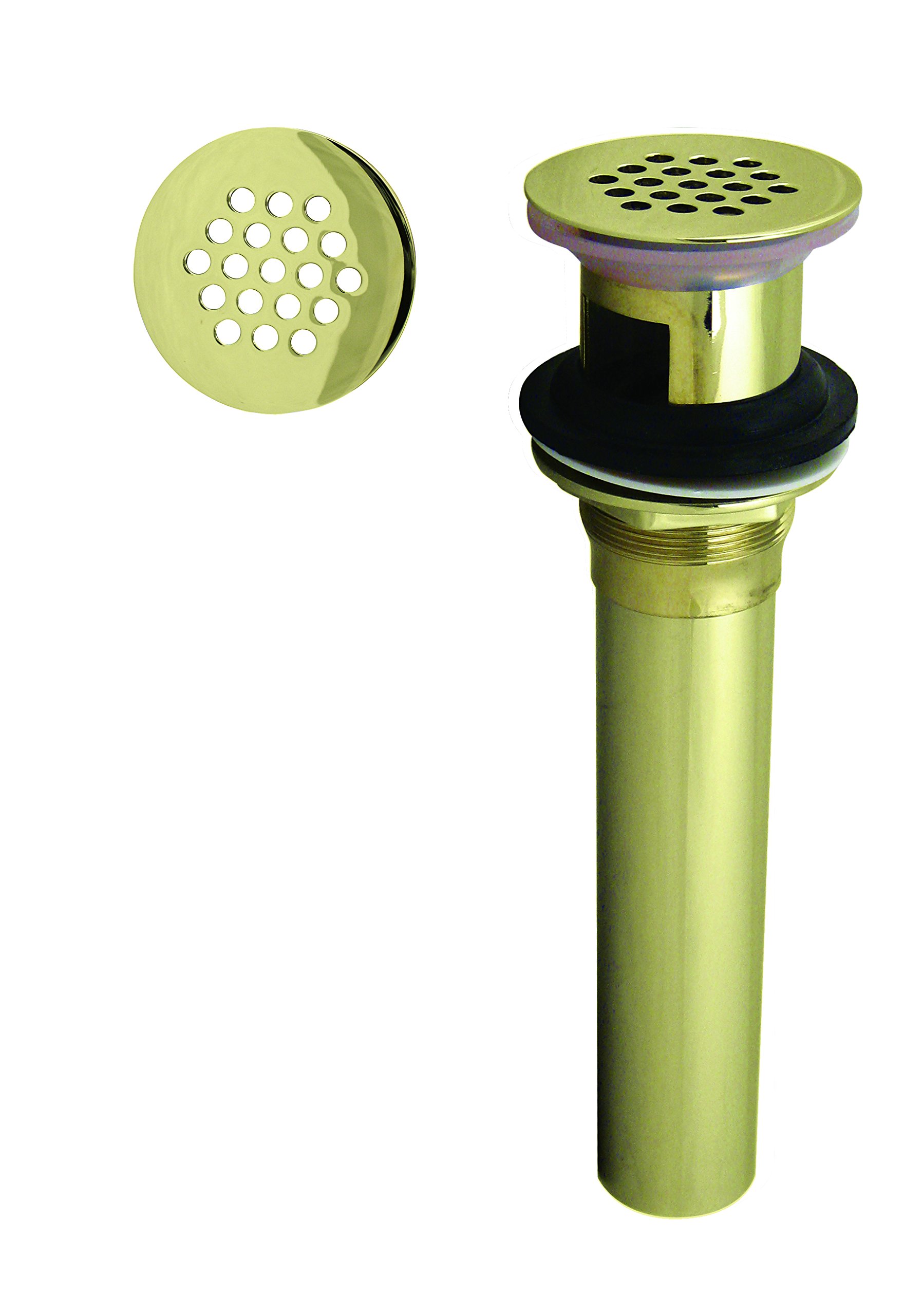
Image: Westbrass D411-2-01 Polished Brass Grid Strainer Lavatory Drain. This image displays the complete drain assembly in a polished brass finish.
Zvinokosha:
- 19-hole grid strainer design for lavatory sinks with overflow holes.
- Designed to fit a 1-1/2 inch sink opening with a 1-1/4 inch tailpiece.
- Fully finished for exposed plumbing installations.
- Accommodates sink thicknesses ranging from 1-1/4 inches to 1-7/8 inches.
- Can be used with a D410SP mounting spacer ring for installation on thinner sinks (spacer ring sold separately).
Zvinotsanangurwa

Image: Westbrass D411-2-01 Specification Sheet. This diagram provides detailed dimensions and part numbers for the D411-2 lavatory drain.
| Chikamu Nhamba | D411-2-01 |
| Material | Brass |
| Finish Type | Brass Yakanatswa |
| Item Weight | 9.6 ounces |
| Product Dimensions | 11.5 x 4.25 x 3.25 inches |
| Special Feature | Center Post |
| UPC | 747028007146 |
Setup uye Installation
Proper installation is crucial for the functionality and longevity of your lavatory drain. Please follow these general guidelines. If you are unsure about any step, it is recommended to consult a qualified plumber.
Zvishandiso Nezvinhu Zvinodiwa (Hazvibatanidzwi):
- Chipanera chinogadziriswa kana basin chipanera
- Silicone sealant (do NOT use plumber's putty)
- Teflon tape (thread seal tape)
- Micheka yakachena
Kuisa Matanho:
- Gadzirira Kuvhurwa kweSinki: Ensure the sink drain opening is clean and free of debris. Verify that the opening size is 1-1/2 inches.
- Shandisa Sealant: Apply a bead of silicone sealant around the underside of the drain flange (the top part that sits inside the sink). Important: Do not use plumber's putty for installation; use silicone sealant.
- Insert Drain Body: Insert the drain body through the sink opening from the top. Ensure the grid strainer is properly aligned.
- Secure from Below: From underneath the sink, slide the rubber washer, friction washer, and then the lock nut onto the drain body. Hand-tighten the lock nut.
- Gadzirisa uye Simbisa: Ensure the drain is properly centered and the grid is facing the desired direction. Use an adjustable wrench to firmly tighten the lock nut. Do not overtighten, as this can damage the sink or drain.
- Apply Teflon Tape to Tailpiece: Wrap Teflon tape clockwise around the threads of the drain's tailpiece where it will connect to the P-trap or other plumbing. This helps prevent leaks.
- Batanidza Plumbing: Connect the P-trap assembly to the drain tailpiece and tighten all connections.
- Test for Leaks: Fill the sink with water and then drain it, carefully checking all connections for any signs of leaks. Repeat this process several times.
Note on Sink Thickness: This drain fits sinks 1-1/4 inches to 1-7/8 inches thick. For thinner sinks, a D410SP mounting spacer ring (sold separately) may be required for proper installation.
Operating Instruction
The Westbrass D411-2-01 grid strainer drain is designed for simple operation. Water flows through the 19-hole grid into the drain. The grid prevents larger debris from entering the plumbing system, helping to prevent clogs.
- Ensure the grid is clear of large obstructions to maintain proper drainage.
- Periodically remove any hair or debris that accumulates on the grid to prevent slow drainage.
Maintenance
Regular maintenance will help keep your drain functioning correctly and preserve its finish.
Kuchenesa:
- Clean the drain's visible surfaces regularly with a soft cloth and mild soap.
- Avoid abrasive cleaners, harsh chemicals, or scouring pads, as these can damage the polished brass finish.
- Shamba zvakanaka nemvura yakachena mushure mekuchenesa wozoomesa nejira rakapfava kudzivirira mavanga emvura.
Kuongorora:
- Periodically inspect the drain connections underneath the sink for any signs of leaks or corrosion.
- Check the grid for any accumulated debris that might impede drainage.
Kugadzirisa matambudziko
Here are solutions to common issues you might encounter with your lavatory drain.
Issue: Leaks from connections underneath the sink.
- Chikonzero: Loose connections, insufficient sealant, or improper application of Teflon tape.
- Solution: Carefully inspect all threaded connections. Ensure Teflon tape was applied correctly to the tailpiece threads before connecting the P-trap. Tighten connections with a wrench, being careful not to overtighten. If the leak is from the sink flange, the drain may need to be re-seated with fresh silicone sealant.
Issue: Slow drainage.
- Chikonzero: Debris (hair, soap scum) accumulated on the grid or further down the drainpipe.
- Solution: Remove any visible debris from the grid strainer. If the issue persists, the clog may be in the P-trap or further down the drain line, requiring standard plumbing clog removal techniques.
Warranty Information
This Westbrass product is covered by a 1-makore mashoma waranti. Please retain your proof of purchase for warranty claims. For specific details regarding warranty coverage and procedures, refer to the documentation included with your purchase or contact Westbrass customer support.
Mutengi Support
For further assistance, technical support, or inquiries regarding your Westbrass D411-2-01 lavatory drain, please contact Westbrass customer service. Contact information can typically be found on the Westbrass official websaiti kana pane chigadzirwa kurongedza.
When contacting support, please have your model number (D411-2-01) and purchase date available.


