1. Nhanganyaya
This manual provides essential information for the safe and efficient use of your Nedis Rechargeable Lead Acid Battery (Model BALA900012V). Please read these instructions carefully before installation and operation to ensure optimal performance and longevity of the battery.

Image 1.1: Nedis 12V 9000mAh Rechargeable Lead Acid Battery in a workshop environment, showcasing yayo compact dhizaini.
2. Mirayiridzo Yekuchengetedza
Gara uchitevera matanho ekuchengetedza kuti udzivise kukuvara kana kukuvara kwebhatiri nemidziyo yakabatana:
- USAFURIKISA DZERO PFUPI: Avoid connecting the positive and negative terminals directly, as this can cause severe damage to the battery, fire, or explosion.
- Use only compatible chargers designed for lead-acid batteries with the specified voltage uye ikozvino.
- Usaisa bhatiri kune tembiricha yakanyanyisa, zuva rakananga, kana moto.
- Chengeta bhatiri kure nemvura nehunyoro.
- Do not attempt to open or disassemble the battery. It contains corrosive substances.
- In case of contact with battery acid, immediately flush the affected area with plenty of water and seek medical attention.
- Chengetedza pasingasvikirwi nevana.
- Ensure proper ventilation when charging to prevent accumulation of gases.
- RECHARGE AFTER USE: To maintain battery health and extend its lifespan, recharge the battery promptly after each use.
3. Chigadzirwa Pamusoroview
The Nedis BALA900012V is a 12V, 9000mAh (9Ah) rechargeable sealed lead-acid battery designed for various applications requiring reliable power. Its robust construction ensures durability and consistent performance.

Mufananidzo 3.1: Yakadzama view of the battery label, displaying model number BALA900012V and constant voltage charge parameters.
Zvinokosha:
- Voltage: 12 Volts
- Kugona 9000 mAh (9 Ah)
- Kuumbwa kwebhatiri: Lead Acid
- Reusability: Rechargeable
- Model Number: BALA900012V
- Designed for reliable power supply in various electronic tools and devices.
4. Setup uye Kuiswa
Before connecting the battery, ensure that the device it will power is compatible with a 12V lead-acid battery and that the current requirements do not exceed the battery's capabilities.
- Inspect the Battery: Visually check the battery for any signs of damage, leaks, or corrosion on the terminals. Do not use a damaged battery.
- Ziva Zviteshi: Locate the positive (+) and negative (-) terminals on the battery. The positive terminal is typically marked with a plus sign and is often red, while the negative terminal is marked with a minus sign and is often black.
- Batanidza kuChishandiso: Connect the positive terminal of the battery to the positive input of your device. Connect the negative terminal of the battery to the negative input of your device. Ensure connections are secure and tight to prevent arcing or poor performance.
- Chekutanga Charge: For optimal performance, it is recommended to fully charge the battery before its first use. Refer to the "Operating Instructions" section for charging details.

Mufananidzo 4.1: Pamusoro view of the battery clearly showing the positive and negative terminals for correct connection.
5. Operating Instructions
Kuchaja Bhatiri:
Use a charger specifically designed for 12V lead-acid batteries. The battery label provides critical charging parameters:
- Constant Voltage Charge:
- Cycle Use: 14.40 - 15.00 V
- Standby Use: 13.50 - 13.80 V
- Initial Current: Asingasviki 2.70 A
- RECHARGE AFTER USE: Always recharge the battery immediately after it has been discharged to prevent sulfation and prolong its life.
- Do not overcharge the battery, as this can reduce its lifespan and potentially cause damage.
- Ensure the charger's output voltage matches the battery's requirements.

Mufananidzo 5.1: Angled view of the battery, highlighting its robust casing and terminal design.
Kuburitsa Bhatiri:
- Avoid deep discharges. While lead-acid batteries can tolerate deep discharges, frequent deep cycling can shorten their lifespan.
- Tarisa voltage of the battery if your application allows. Do not allow the battery voltage to drop below 10.5V under load.
6. Kuchengeta
Proper maintenance ensures the longevity and reliability of your Nedis battery:
- Kuchaja nguva dzose: Always recharge the battery after use. If stored for extended periods, recharge it every 3-6 months to prevent self-discharge and sulfation.
- Kuchenesa Zviteshi: Keep the battery terminals clean and free from corrosion. Use a wire brush if necessary and apply a thin layer of petroleum jelly to prevent future corrosion.
- Kuchengeta: Store the battery in a cool, dry place, away from direct sunlight and extreme temperatures. Ensure it is fully charged before storage.
- Kuongororwa Kwenyama: Ongorora bhatiri nguva nenguvaasing for any cracks, bulges, or leaks. Discontinue use immediately if any damage is observed.
7. Kugadzirisa matambudziko
| Dambudziko | Zvinogona Kukonzera | Solution |
|---|---|---|
| Bhatiri harichaji |
|
|
| Nguva pfupi yekushandisa |
|
|
| Battery overheating during charge/discharge |
|
|
8. Zvinotsanangurwa
| Feature | Detail |
|---|---|
| Brand | NEDIS |
| Model Number | BALA900012V |
| Kuumbwa kwebhatiri | Lead Acid |
| Voltage | 12 Volts |
| Capacity | 9000 mAh (9 Ah) |
| Reusability | Rechargeable |
| Kurema | 2.34 makirogiramu |
| Nyika Yekwakabva | China |
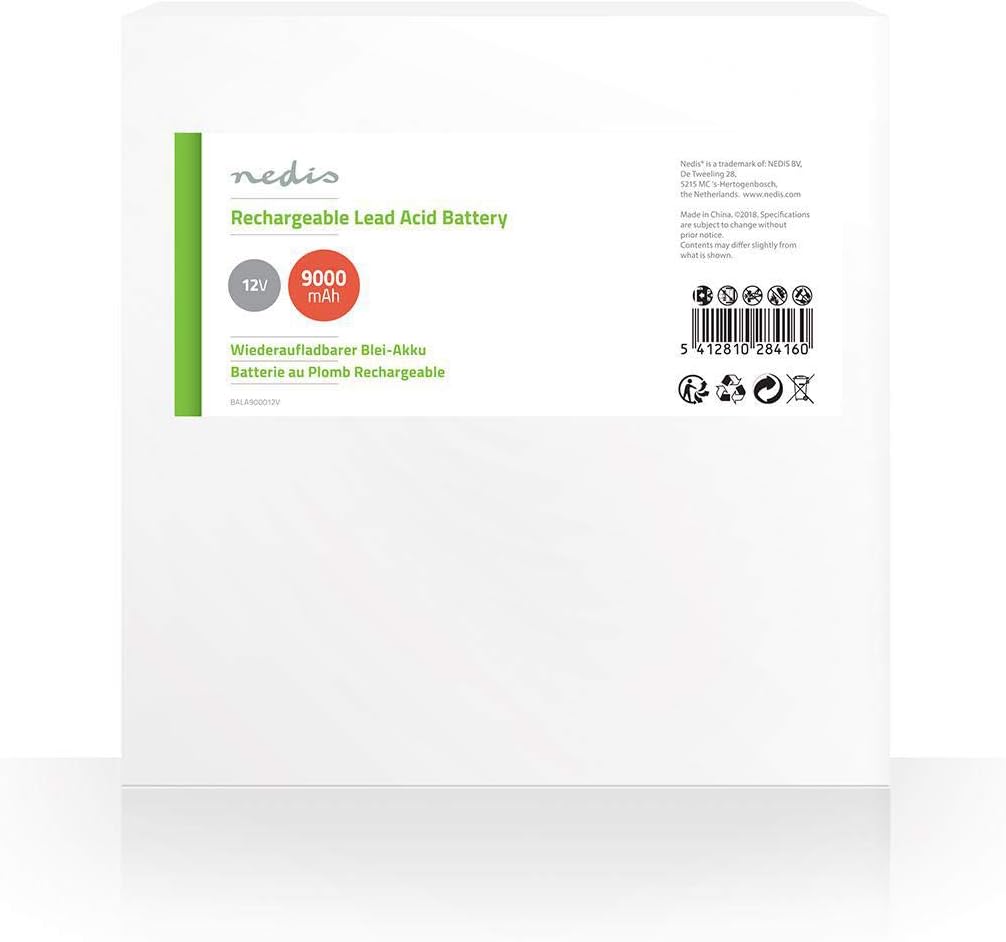
Mufananidzo 8.1: Kumashure view of the battery, showing branding, model information, and regulatory marks.
9. Ruzivo Rwokurasa
This product contains a lead-acid battery. Do not dispose of the battery with general household waste. Lead-acid batteries are recyclable and should be disposed of at designated collection points or recycling facilities in accordance with local regulations. Proper disposal helps prevent potential negative consequences for the environment and human health.
10. Warranty uye Tsigiro
Kuti uwane ruzivo nezvewarandi, rutsigiro rwehunyanzvi, kana mibvunzo yebasa, ndapota tarisa magwaro akapihwa pakutenga kwako kana kuti bata mutengesi wako. Chengeta humbowo hwekutenga kwako kuti uwane zvikumbiro zvewarandi.


