1. Nhanganyaya
The Fieldpiece DR58 Heated Diode Refrigerant Leak Detector is an ultra-sensitive tool designed for HVACR professionals to quickly and accurately locate refrigerant leaks. Utilizing a heated diode sensor, it detects a wide range of refrigerants with high precision. This manual provides essential information for the proper setup, operation, maintenance, and troubleshooting of your DR58 leak detector.
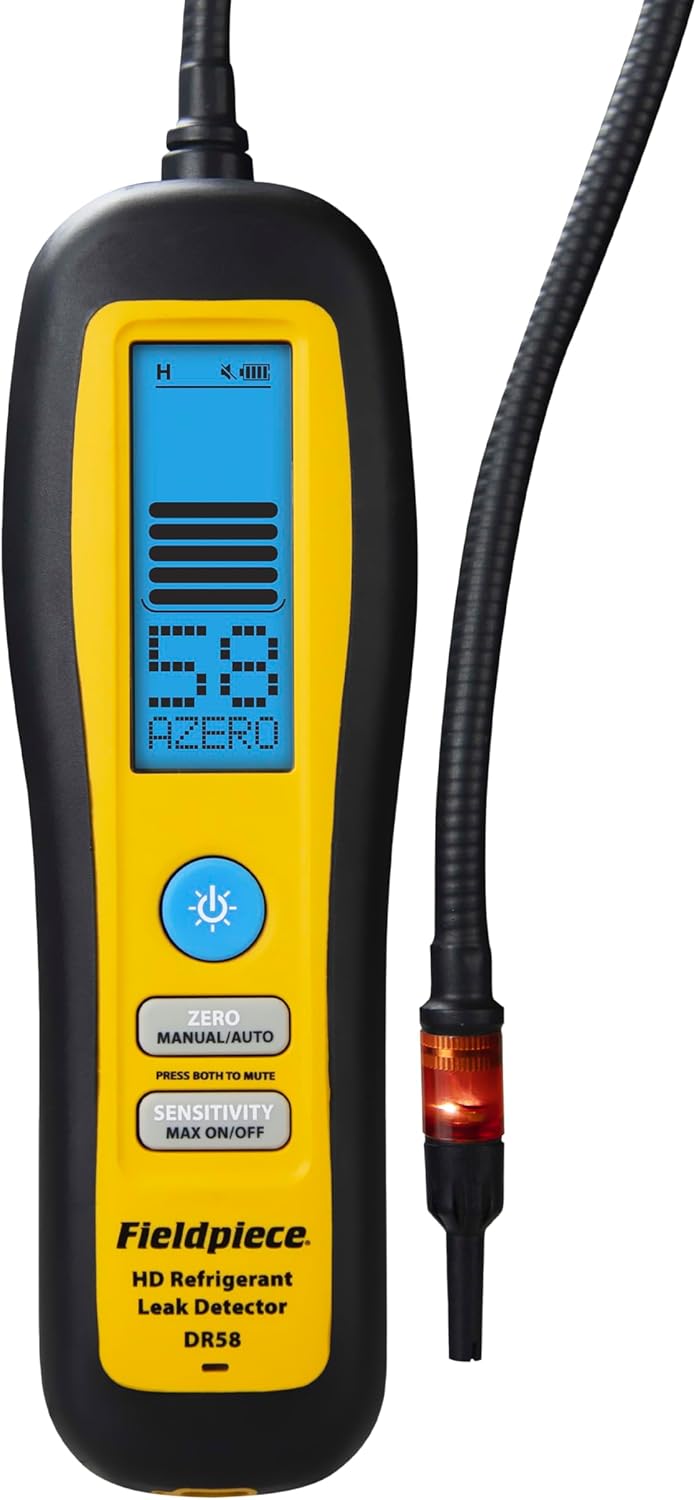
Image 1.1: The Fieldpiece DR58 Heated Diode Refrigerant Leak Detector, showing its main body and flexible probe.
2. Key Features
The DR58 is equipped with several features to enhance leak detection efficiency:
- Ultra-Sensitive Heated Diode Sensor: Detects micro leaks as small as <0.03 oz/yr, offering 20 times greater sensitivity than traditional bubble methods.
- Universal Refrigerant Compatibility: Capable of detecting all HFC, CFC, HCFC, HFO, H2N2 (Tracer Gas), and blended refrigerants used in HVACR systems.
- Inogara uye Inogara kwenguva refu: Features an IP54 rating for resistance against moisture and oil, ensuring reliability in various working conditions. The sensor has a typical life of 300 hours.
- Clear Leak Indicators: A large, backlit LCD screen displays leak size and intensity using a bar graph and numeric readings. An LED tip and audible beep provide immediate feedback for precise leak pinpointing.
- Flexible Probe and Extended Battery Life: A 17-inch flexible probe allows access to tight spaces. The rechargeable USB battery provides up to 18 hours of continuous operation. Replaceable filter tips are included.

Image 2.1: Visual summary of the DR58's features, including its heated diode sensor, backlit LCD, refrigerant compatibility, and durable design.
3. Setup
Before initial use, ensure the DR58 is properly set up and charged.
3.1 Kusunungura uye Zvikamu
Your Fieldpiece DR58 package should include:
- 1 x Heated Diode Refrigerant Leak Detector (DR58)
- 5 x Replacement Filtered Tips (RFT6)
- 1 x Blow-Molded Case
- 1 x Heated Diode Sensor (RHD1) (pre-installed or separate)
- 1 x USB Charging Cable and Wall Adapter

Image 3.1: Contents of the DR58 package, showing the detector, charging cable, filter tips, and case.
3.2 Kutanga Kuchaja
- Connect the USB charging cable to the DR58's charging port.
- Plug the other end of the cable into the wall adapter and then into a power outlet.
- Allow approximately 6 hours for a full charge. The battery indicator on the LCD will show charging status.
3.3 Sensor and Filter Tip Installation
- Ita shuwa kuti mudziyo wakadzimwa.
- If the heated diode sensor (RHD1) is not already installed, carefully insert it into the end of the flexible probe until it clicks into place.
- Screw a filtered tip onto the end of the sensor. Ensure it is finger-tight to prevent debris from entering the sensor.
4. Kushanda
Follow these steps for effective leak detection with your DR58.
4.1 Powering On and Warm-up
- Press and hold the power button (blue button with sun icon) for approximately 1 second to turn on the device.
- The DR58 will display 'Warm' and then 'AZERO' as it warms up and performs an automatic zeroing. This process typically takes less than 10 seconds.
4.2 Zeroing the Device
Zeroing establishes a baseline for the ambient air, allowing the detector to accurately identify refrigerant concentrations above this baseline.
- Kuisa Zero otomatiki: The device automatically zeros upon power-on and continuously adjusts to background refrigerant levels during operation.
- Manual Zeroing: To manually zero the device, move the probe to an area known to be free of refrigerant. Press the 'ZERO MANUAL/AUTO' button. The display will show 'AZERO' to confirm.
4.3 Kugadzirisa Sensitivity
The DR58 offers adjustable sensitivity levels to suit different leak detection scenarios.
- Press the 'SENSITIVITY MAX ON/OFF' button to cycle through sensitivity levels (High, Medium, Low).
- Use higher sensitivity for smaller leaks or when the leak source is difficult to pinpoint. Use lower sensitivity in areas with higher background refrigerant levels to avoid false positives.
4.4 Leak Detection Procedure
- Slowly move the flexible probe along the suspected leak area, such as refrigerant lines, coils, and connections. Maintain a consistent speed of approximately 1-2 inches per second.
- Observe the LCD display for increasing bar graph segments and numeric readings, indicating the presence of refrigerant.
- Listen for the audible beep, which will increase in frequency and pitch as the leak source is approached.
- The LED tip on the probe will also illuminate red, intensifying as the leak concentration increases.
- Once a leak is detected, move the probe away from the area and then slowly re-approach to confirm the exact location.

Image 4.1: Close-up of the DR58's flexible probe tip, showing the illuminated red LED indicator during leak detection.
Video 4.1: An official product video demonstrating the Fieldpiece DR58 leak detector in use, highlighting its features and effectiveness in finding refrigerant leaks.
5. Kuchengeta
Regular maintenance ensures the longevity and accuracy of your DR58.
5.1 Replacing Filter Tips
The filter tips prevent debris from entering the sensor. Replace them regularly, especially in dirty environments, or if they appear clogged.
- Unscrew the old filter tip from the sensor.
- Screw on a new replacement filter tip (RFT6) until it is finger-tight.
5.2 Sensor Kutsiva
The heated diode sensor (RHD1) has a typical life of 300 hours. Replace the sensor when its performance degrades or if the device indicates a sensor error.
- Power off the DR58.
- Unscrew the filter tip.
- Gently pull the old sensor out of the probe.
- Insert the new RHD1 sensor into the probe until it clicks into place.
- Re-attach a clean filter tip.
5.3 Kuchenesa
- Pukuta kunze kwemudziyo nekushambadziraamp jira. Usashandise abrasive cleaners kana solvents.
- Ensure the sensor and filter tip are free from oil, moisture, and debris.
6. Kugadzirisa matambudziko
If you encounter issues with your DR58, refer to the following common problems and solutions.
| Dambudziko | Zvinogona Kukonzera | Solution |
|---|---|---|
| Mudziyo haubatike. | Bhatiri rakaderera kana rapera. | Charge the device using the provided USB cable and adapter. |
| Kuverenga kusina kururama kana kusaenderana. | Sensor contaminated or worn out; filter tip clogged; high background refrigerant. | Replace filter tip. Replace sensor if necessary. Perform manual zeroing in a clean air environment. |
| No leak detected despite suspected leak. | Low sensitivity setting; probe moved too quickly; sensor issue. | Increase sensitivity. Move probe slower. Check and replace sensor if needed. |
| Constant alarm or high readings in clean air. | Device not properly zeroed; sensor contaminated. | Perform manual zeroing in a clean air environment. Clean or replace sensor. |
7. Zvinotsanangurwa
Technical specifications for the Fieldpiece DR58 Heated Diode Refrigerant Leak Detector.

Image 7.1: A detailed list of the DR58's technical specifications, including sensor type, sensitivity, and battery life.
| Tsanangudzo | Value |
|---|---|
| Sensor Type | Inopisa diode sensor |
| Sensor Hupenyu | 300 maawa chaiwo |
| Sensitivity Levels | High, medium, low (selectable) |
| Maximum Sensitivity | 0.03 oz/yr (1g/a) stationary; 0.1 oz/yr (3g/a) in motion |
| Detection Feedback | Red tip LED, LCD bar graph, LCD manhamba, beeper |
| Referrants | HFC, HCFC, CFC, HFOs, uye misanganiswa |
| Nguva Yekupindura | <1 masekonzi akajairika |
| Nguva Yekudzorera | <10 masekonzi akajairika |
| Bhatiri Type | 3.7 VDC (zita) 2550mAh, isingatsivike |
| Charge Time | 6 hours typical with included charger |
| Hupenyu hwebhatiri | 18 maawa akajairika, backlight yakadzimwa |
| Auto Power Off | Maminitsi gumi pasina kuonekwa kana kudzvanya bhatani |
| Operating Environment | 32°F kusvika 104°F (0°C kusvika 40°C); <75% RH (isina-condensing) |
| Storage Temperature | -4°F kusvika 140°F (-20°C kusvika 60°C); <80% RH |
| Kurema | 14 oz (400g) |
| Kuramba Mvura | Yakagadzirirwa IP54 |
| Product Dimensions | 10 x 8 x 10 inches |
8. Warranty uye Tsigiro
Fieldpiece Instruments provides a warranty for its products against defects in material and workmanship. For specific warranty terms, registration, and technical support, please refer to the official Fieldpiece websaiti kana kubata basa ravo revatengi zvakananga. Chengeta risiti rako rekutenga seumboo hwekutenga.
Kuti uwane rumwe rubatsiro, shanya iyo Fieldpiece Store on Amazon or the official Fieldpiece website.


