Nhanganyaya
This manual provides essential instructions for the safe and efficient use of your Linkind Solar Spotlights (Model LL18007-DW-US-4). These outdoor landscape lights are designed to provide 6500K daylight white illumination with a unique 20*40° beam angle. Featuring an adjustable solar panel and three brightness modes, they are ideal for enhancing your yard, garden, or house exterior.
Setup uye Installation
Before first use, ensure the solar spotlights are charged under direct sunlight for 24 to 48 hours with the light turned off. This initial charge optimizes battery performance.
- Unpack Components: Carefully remove all components from the packaging. Each spotlight unit includes a light head, solar panel, connecting rod(s), and a ground spike.
- Unganidza Unit: Attach the connecting rod(s) to the light head and then to the ground spike. The product includes two rods and one spike, allowing for three height options to suit your specific lighting needs. No additional tools are required for assembly.
- Positioning for Solar Absorption: Sarudza nzvimbo yekuisa inogamuchira ample direct sunlight throughout the day. The solar panel and light head are independently adjustable with a 135° wide rotatable angle. Adjust the solar panel to face the sun directly to maximize solar absorption.
- Ground Installation: Insert the assembled unit firmly into the ground. Ensure the spike is fully embedded for stability.

Image: The adjustable light head and solar panel allow for precise positioning to capture sunlight and direct light.

Image: Various installation height options are available using the provided rods and spike.
Operating Instruction
The Linkind Solar Spotlights are designed for automatic operation, but also offer adjustable brightness settings.
- Automatic Operation: The spotlights feature an ambient brightness sensor. They will automatically switch from energy-saving mode to lighting mode when the ambient brightness is low enough (at dusk) and turn off at sunrise.
- Kupenya Modes: Each spotlight offers three brightness modes:
- PASI: Provides up to 24 hours of lighting.
- ZVIRI PAKATI Provides up to 12 hours of lighting.
- PAMUSORO: Provides up to 6 hours of lighting.
- Changing Brightness Mode: Locate the red button on the back of the solar panel. Press this button to cycle through the LOW, MEDIUM, and HIGH brightness settings. Select the desired mode based on your lighting duration requirements.
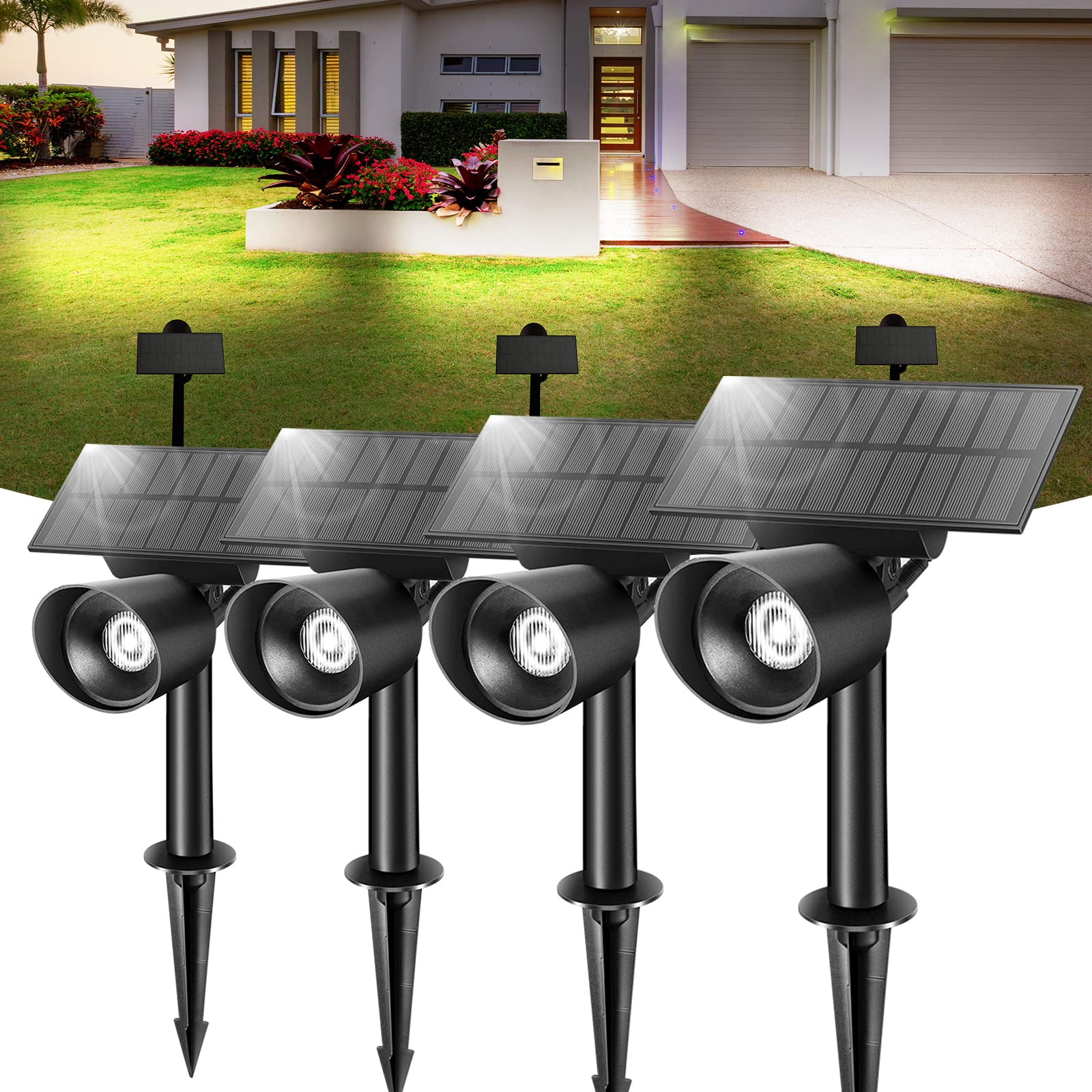
Image: The red button on the solar panel allows you to select between three brightness levels.

Image: The spotlights automatically charge during the day and illuminate at night.
Maintenance
Regular maintenance ensures optimal performance and longevity of your solar spotlights.
- Chenesa Solar Panel: Nguva nenguva pukuta solar panel nekanyoro, damp jira rekubvisa huruva, tsvina, mashizha, kana sinou. Pani yakachena inovimbisa kunyura kwezuva uye kuchaja kwakanaka.
- Tarisa Kuiswa: Ensure that no new obstructions (e.g., growing plants, new structures) are blocking direct sunlight from reaching the solar panel.
- Ongorora Zvakaipa: Regularly check the light units, wiring, and spikes for any signs of damage. The product is IP65 waterproof, but physical damage can compromise this protection.

Image: The IP65 waterproof design ensures durability against various weather conditions, including heat and frost.
Kugadzirisa matambudziko
If your Linkind Solar Spotlights are not functioning as expected, consider the following:
- Chiedza Chisingabatike Husiku:
- Insufficient Charge: Ensure the solar panel receives 6-8 hours of direct sunlight daily. Relocate the unit if necessary.
- Chekutanga Charge: Confirm the unit was charged for 24-48 hours with the light off before first use.
- Ambient Light: The light sensor may be detecting ambient light (e.g., streetlights, porch lights). Move the spotlight to a darker location.
- Reset Bhatani: Some units may have a small reset button. Pressing it can resolve minor operational issues.
- Dim or Short-Lived Light:
- Inadequate Sunlight: The solar panel is not receiving enough direct sunlight to fully charge the battery.
- Dirty Solar Panel: Chenesa pamusoro pe solar panel kuti uve nechokwadi chekuti chiedza chinopinda zvakanyanya.
- Battery Degradation: Over time, rechargeable batteries may lose capacity. If the unit is old, the battery might need replacement (if user-replaceable).
- Selected Brightness Mode: Ensure the desired brightness mode is selected. Higher brightness modes (MEDIUM, HIGH) have shorter lighting durations.
- Water Inside Light Head:
- While the product is IP65 waterproof, inspect for any visible cracks or loose seals that might compromise its water resistance. Ensure all components are securely assembled.
Zvinotsanangurwa
| Feature | Detail |
|---|---|
| Brand | Linkind |
| Model Number | LL18007-DW-US-4 |
| Chiedza Rudzi | 6500K Daylight White |
| Beam Angle | 20 * 40 ° |
| Kupenya Modes | Low (24hrs), Medium (12hrs), High (6hrs) |
| Simba Source | Solar Powered |
| Indoor / Outdoor Kushandiswa | Kunze |
| Mvura Resistance Level | IP65 Isingapindi mvura |
| Material | LED, Solar Spotlights |
| Product Dimensions | 7.9"L x 6.4"W x 11.3"H |
| Item Weight | 3.08 mapaundi (emapaketi gumi nemaviri) |
| Mabhatiri | 1 Lithium Polymer bhatiri inodiwa (inosanganisirwa) |
| Gungano Rinodiwa | Ehe |

Image: Key features and specifications of the Linkind Solar Spotlight.
Warranty Information
Specific warranty details for the Linkind Solar Spotlight (Model LL18007-DW-US-4) are not provided in this document. For information regarding warranty coverage, duration, and claims, please refer to the product packaging, the manufacturer's official website, or contact your retailer directly.
Mutengi Support
For further assistance, technical support, or inquiries not covered in this manual, please contact Linkind customer service through their official website or the retailer from whom you purchased the product. Please have your model number (LL18007-DW-US-4) and purchase details ready when contacting support.


