1. Nhanganyaya
This manual provides detailed instructions for the ABLEWE USB to HDMI Adapter. This device is designed to connect a computer with a USB interface to an HDMI-equipped display, such as an HDTV, monitor, or projector. It supports video resolutions up to 1080P and facilitates both mirror and extend display modes.
2. Chigadzirwa Pamusoroview
The ABLEWE USB to HDMI Adapter is a compact device that converts a USB signal to an HDMI output. It features a USB 3.0 port for connection to your computer and an HDMI output port for your display. The adapter is built with an aluminum exterior for durability.
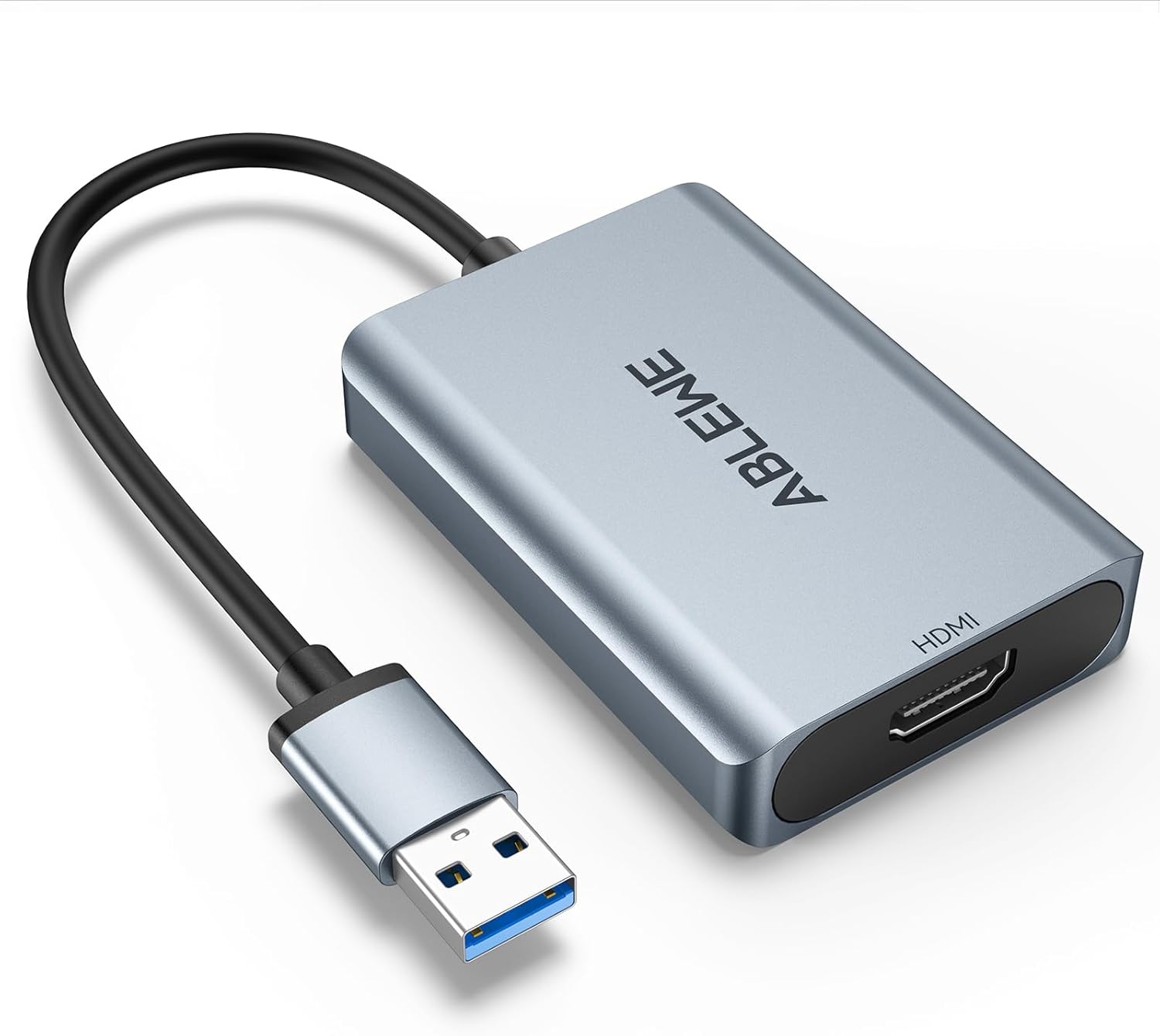
Mufananidzo 2.1: The ABLEWE USB to HDMI Adapter. This image shows the adapter with its USB-A connector and HDMI output port, featuring a silver aluminum casing.
3. Kugarisana
The adapter offers broad compatibility with various operating systems and devices.
3.1 Supported Operating Systems:
- Windows 10
- Windows 8.1
- Windows 8
- Windows 7
- Windows XP (32-bit)
- Mac OS
3.2 Unsupported Operating Systems:
- Windows XP (64-bit)
- Linux OS
- Chrome OS

Mufananidzo 3.1: Universal Compatibility. This image illustrates the operating system compatibility of the ABLEWE USB to HDMI Adapter, showing support for various Windows versions and Mac OS, while noting that Linux, 64-bit XP, and Chrome OS are not supported.
4. Setup uye Kuiswa
Follow these steps to set up and install your ABLEWE USB to HDMI Adapter:
- Batanidza Adapter: Plug the USB-A connector of the adapter into an available USB 3.0 or USB 2.0 port on your computer.
- Kuiswa kwemutyairi: The adapter includes built-in drivers. Upon plugging it into your computer, the driver installation process should initiate automatically. Follow any on-screen prompts to complete the installation.
- Alternative Driver Sources:
- If automatic installation does not occur, a driver backup may be available on a provided CD (if included).
- Alternatively, you can download the necessary drivers from the official "DisplayLink" website.
- Batanidza kuChiratidziro: Connect one end of an HDMI cable (not included) to the HDMI output port on the adapter and the other end to the HDMI input port on your HDTV, monitor, or projector.
- Power On Display: Ensure your display device is powered on and set to the correct HDMI input source.
- Gadzirisa Zvirongwa zvekuratidza: Once connected, your computer should detect the new display. You may need to adjust display settings (e.g., resolution, display mode) within your operating system's display preferences.

Mufananidzo 4.1: Internal Performance Chip. This image provides a view of the internal components of the adapter, highlighting the performance chip responsible for stable and high-resolution video output.
5. Maitiro Okushandisa
The ABLEWE USB to HDMI Adapter supports two primary display modes:
5.1 Extend Mode:
In Extend Mode, your computer's desktop is expanded across multiple screens. This allows you to view different content on each display, enhancing multitasking capabilities. For example, you can have a document open on your laptop screen and a web browser on the connected monitor.
5.2 Mirror Mode:
Mirror Mode duplicates your computer's primary display onto the connected external monitor. This is useful for presentations, sharing content with an audience, or enjoying media on a larger screen.

Mufananidzo 5.1: Different Display Modes. This image demonstrates the two primary operating modes: Extend Mode, which allows for separate content on multiple screens, and Mirror Mode, which duplicates the primary display onto a larger screen.
6. Kubuditsa Audio
The ABLEWE USB to HDMI Adapter supports simultaneous digital audio and video transmission. This means that audio from your computer can be routed through the HDMI connection to your connected display or audio system, provided the display supports audio input via HDMI.

Mufananidzo 6.1: Audio Output Capability. This image highlights the adapter's capability to transmit both digital audio and video simultaneously, ensuring a complete multimedia experience.
7. Common Usage Scenarios
The adapter is suitable for various applications:
- Theatre Theatre: Enjoy movies and videos on a larger screen.
- Conferences: Facilitate presentations and screen sharing in meetings.
- Mutambo Experience games on an external monitor or TV.
- Corporate Training: Display training materials to a group.
- Multitasking: Extend your desktop for increased productivity.
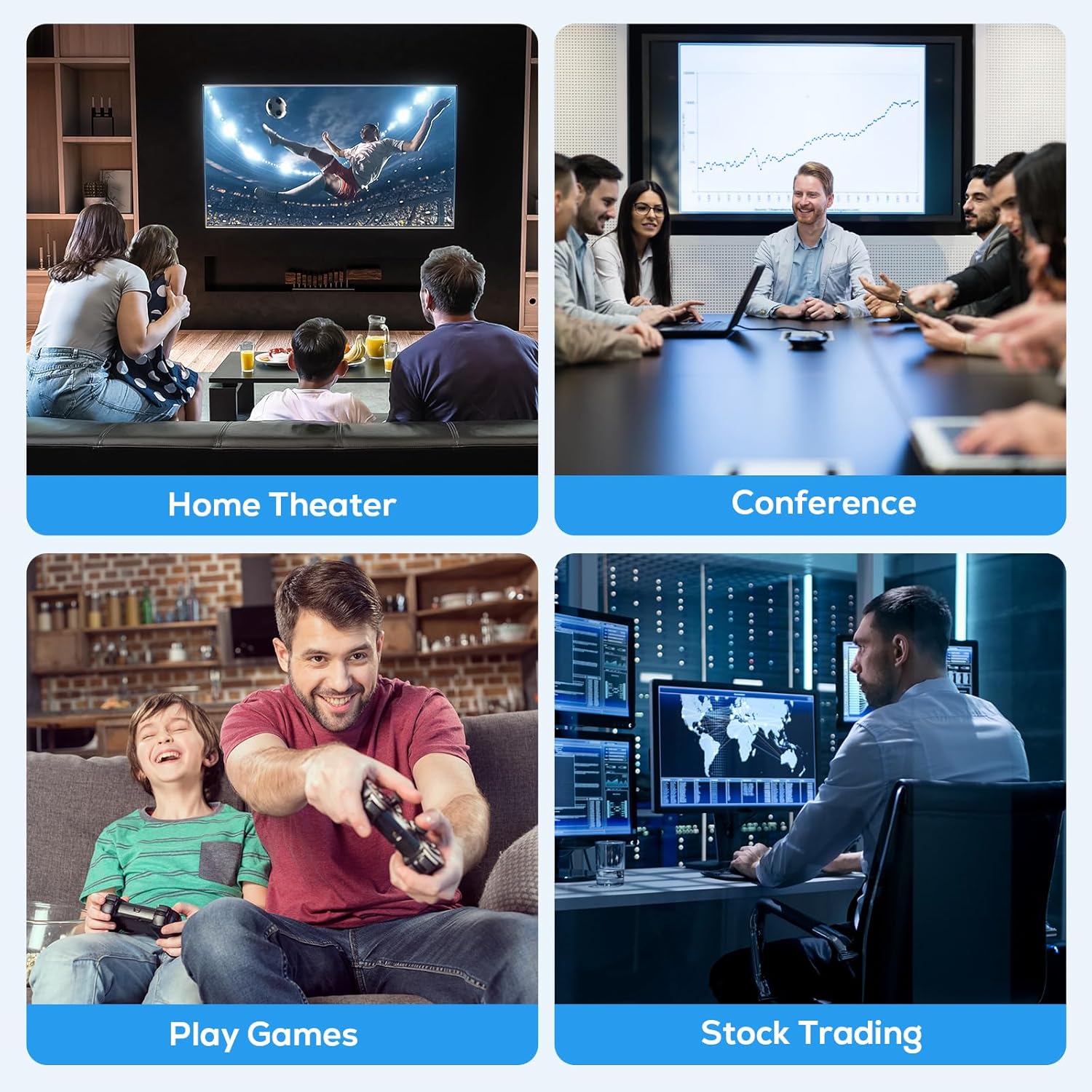
Mufananidzo 7.1: Versatile Applications. This image displays various applications for the adapter, including home theater, conference presentations, gaming, and stock trading, illustrating its versatility.
8. Kugadzirisa matambudziko
If you encounter issues with your ABLEWE USB to HDMI Adapter, refer to the following troubleshooting steps:
- Hapana Kuratidzwa/Sikirini Nhema:
- Ita shuwa kuti tambo dzese dzakabatana zvakachengeteka.
- Verify the display is powered on and set to the correct HDMI input source.
- Check your computer's display settings to ensure the external monitor is detected and enabled.
- Edza tambo yeHDMI yakasiyana kana USB port pakombuta yako.
- Nyaya dzemutyairi:
- If the driver did not install automatically, manually install it from the provided CD (if applicable) or download the latest version from the official DisplayLink website.
- For Windows users, check Device Manager for any unrecognized devices or driver errors. Reinstall the driver if necessary.
- Hapana Audio:
- Ensure your display device supports audio input via HDMI.
- Check your computer's sound settings and select the HDMI output as the default playback device.
- Adjust the volume on both your computer and the display device.
- Low Resolution or Lagging Video:
- Ensure the adapter is connected to a USB 3.0 port for optimal performance. While compatible with USB 2.0, performance may be limited.
- Verify your computer's graphics drivers are up to date.
- Adjust the display resolution in your computer's settings to a supported resolution (e.g., 1920x1080P@60HZ).
- Mac OS Specific Issues:
- Ensure you have installed the correct DisplayLink drivers for Mac OS.
- Check System Preferences > Displays to configure the external monitor.
9. Zvinotsanangurwa
| Feature | Detail |
|---|---|
| Model Number | ABLEWE-USBHDMIAdapter |
| Connector Type | USB-A (Input), HDMI (Output) |
| USB Kugarisana | USB 3.0, USB 2.0 |
| Max Kugadziriswa | 1920x1080P@60HZ (1080P) |
| Display Modes | Mirror, Extend |
| Audio Support | Yes, simultaneous audio and video |
| Inowirirana Devices | Laptop, Desktop, HDTV, Monitor, Projector |
| Inotsigirwa OS | Windows 10/8.1/8/7/XP (32-bit), Mac OS |
| Dimensions | 5.59 x 3.43 x 0.94 inches |
| Item Weight | 3.52 ounces |
| Mugadziri | ABLEWE |
10. Kuchengeta
To ensure the longevity and optimal performance of your ABLEWE USB to HDMI Adapter, follow these maintenance guidelines:
- Kuchenesa: Use a soft, dry cloth to clean the adapter. Avoid liquid cleaners or abrasive materials.
- Kuchengeta: Chengeta adapta munzvimbo inotonhorera, yakaoma kana isiri kushandiswa. Dzivisa kupisa kwakanyanya.
- Kubata: Do not bend or twist the cable excessively. Avoid dropping the adapter.
- Updates: Periodically check the DisplayLink websaiti yemadhiraivha akagadziridzwa kuti ave nechokwadi chekuenderana uye kuvandudzwa kwekuita.
11. Warranty uye Tsigiro
For information regarding product warranty, please refer to the documentation provided with your purchase or contact the seller directly. For technical support, please visit the official ABLEWE websaiti kana kubata dhipatimendi ravo rebasa revatengi.
