Nhanganyaya
This manual provides essential information for the setup, operation, and maintenance of your Bambu Lab P1S + AMS (Combo) 3D Printer. Please read this manual thoroughly before operating the device to ensure safe and optimal performance.
Key Features
- Fully enclosed body for enhanced printing performance with advanced filaments. Designed for high-temperature printing.
- Ready-to-use performance: The printer is designed for immediate operation, featuring automatic bed leveling and vibration compensation.
- Multi-color printing capability: The AMS (Automatic Material System) combo enables multi-color printing, supporting up to 16 colors with multiple AMS units.
- Fast printing with exceptional quality: Utilizes advanced control algorithms, including vibration compensation and pressure advance, for high-speed printing without compromising quality.
- Maximum extruder speed: 500 mm/s.
- Maximum extruder acceleration: 20 m/s².
Setup Guide
The Bambu Lab P1S + AMS (Combo) is designed for ease of setup. Follow these general steps for initial preparation:
- Unboxing uye Kuiswa: Carefully remove the printer and AMS unit from its packaging. Place the printer on a stable, level surface with adequate space around it for ventilation and access.
- Power Connection: Connect the power cable to the printer and a suitable power outlet. The printer supports 100-240 VAC, 50/60 Hz. Note that the power plug standard may vary by region; an adapter or alternative cable might be required for some national standards.
- AMS Connection: Connect the AMS unit to the printer according to the included quick start guide. Ensure all filament tubes are properly seated.
- Kutanga Kubatidza Power on the printer. The system will perform initial self-checks and calibrations, including automatic bed leveling and vibration compensation.
- Filament Loading: Load your desired filament into the AMS unit. The printer supports 1.75 mm filament diameter and is ideal for PLA, PETG, TPU, PVA, PET, ABS, ASA.
- Kuiswa kweSoftware: Install the Bambu Studio slicing software on your computer (Windows, macOS, Linux) or the Bambu Handy app on your mobile device (Android, iOS) for remote control and monitoring.
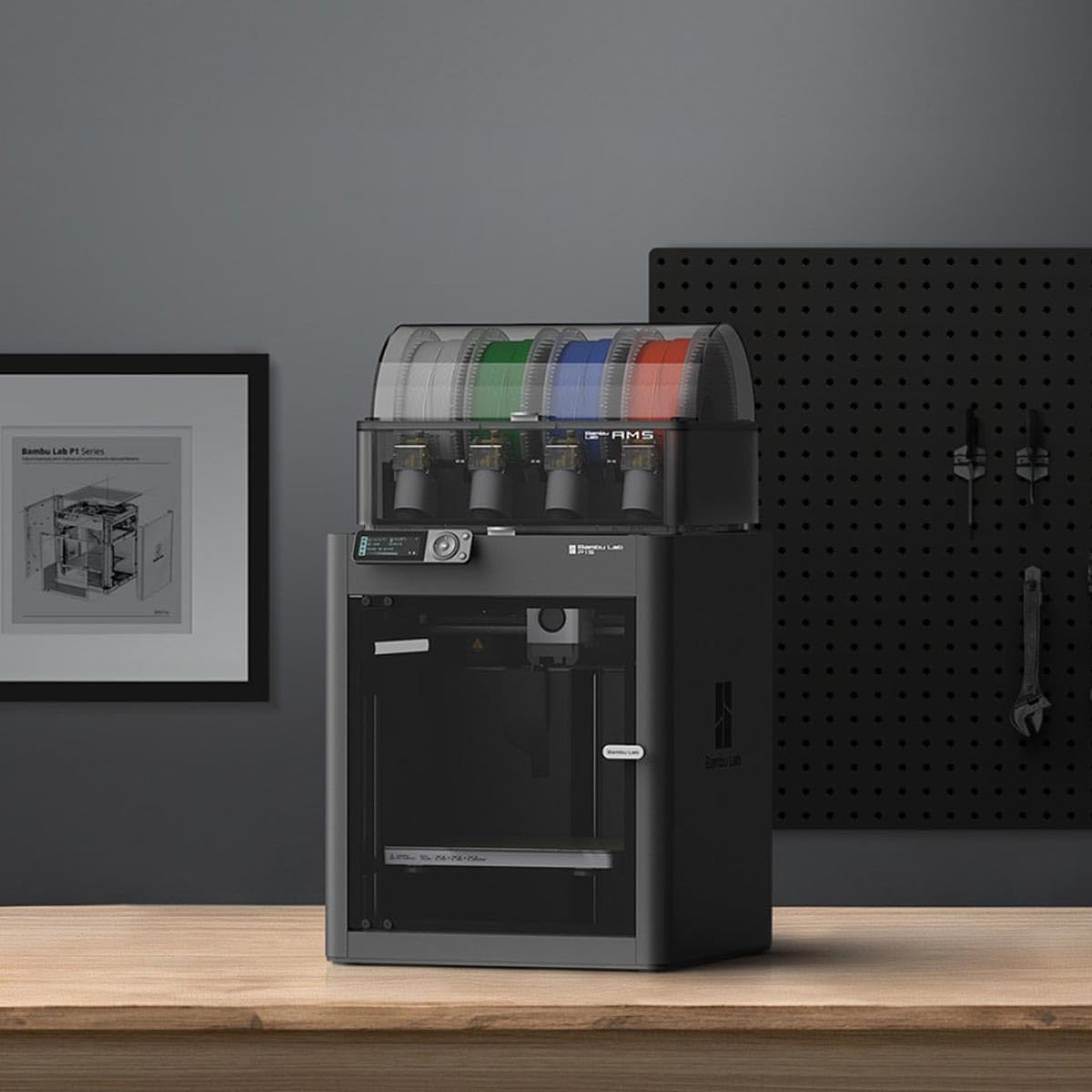
Image: The Bambu Lab P1S 3D printer with the AMS unit positioned on top, ready for operation on a workspace.
Operating Instruction
Operating the Bambu Lab P1S + AMS (Combo) involves preparing your 3D model, sending it to the printer, and monitoring the print process.
- Kugadzirira Muenzaniso: Use Bambu Studio to import your 3D model (e.g., STL, OBJ). Configure print settings such as layer height, infill, and supports. For multi-color prints, assign different filaments to parts of your model using the AMS features in the software.
- Kucheka: Slice the model in Bambu Studio. The software will generate the G-code instructions for the printer.
- Sending to Printer: Send the sliced G-code to your P1S printer via Wi-Fi or SD card.
- Starting Print: On the printer's interface, select the desired print job and confirm. The printer will initiate the pre-print sequence, including heating the hotend and build plate, and performing any necessary calibrations.
- Monitoring: Monitor the print progress through the printer's display, Bambu Handy app, or Bambu Studio. The printer's enclosed design helps maintain a stable printing environment.
- Print Completion: Once the print is complete, allow the build plate to cool before carefully removing the printed object.
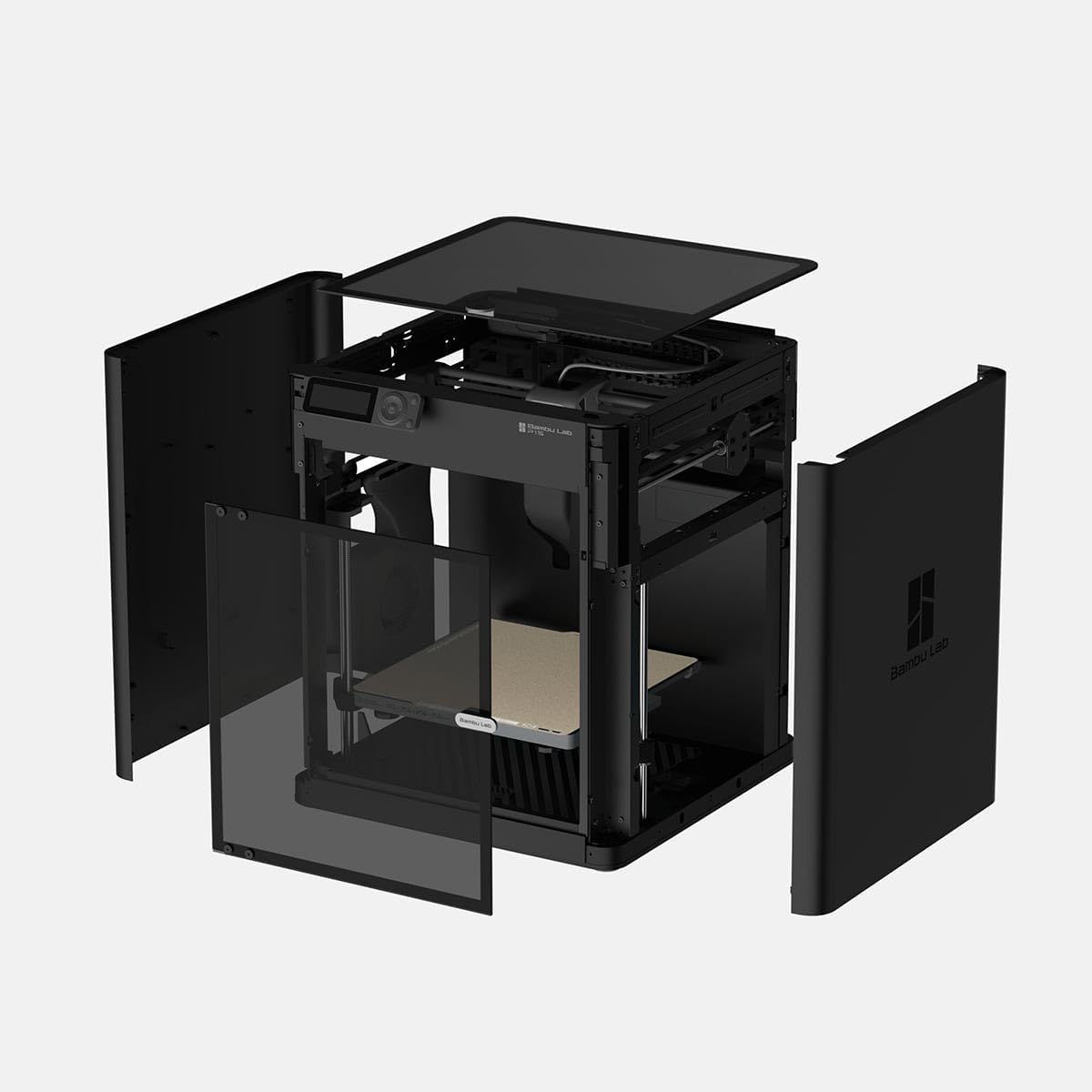
Mufananidzo: Mberi view of the Bambu Lab P1S 3D printer, showcasing its enclosed build volume and user interface.
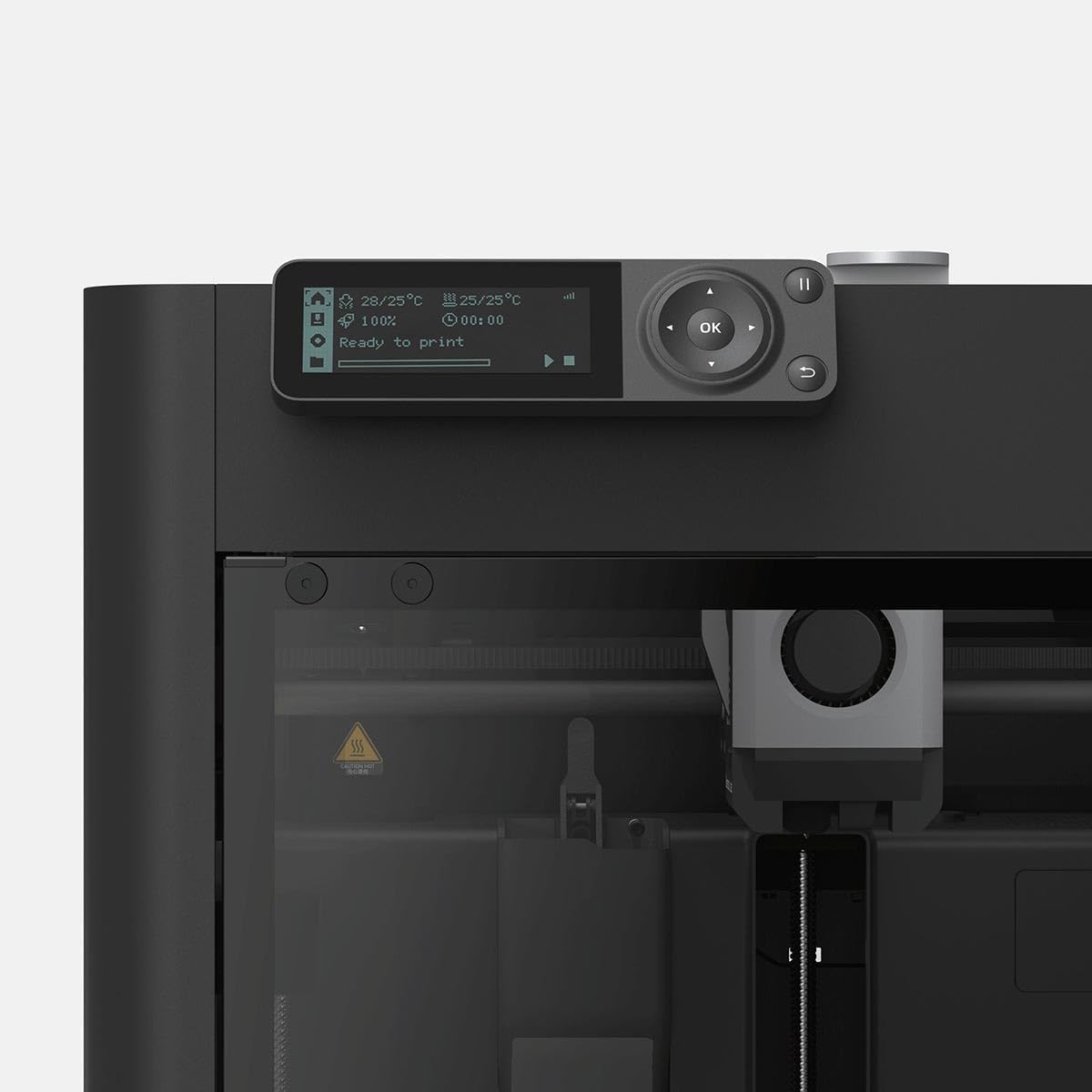
Mufananidzo: Side view of the Bambu Lab P1S 3D printer, highlighting its robust enclosed structure.
Maintenance
Regular maintenance ensures the longevity and consistent performance of your 3D printer.
- Kuchenesa Mapureti Ekuvaka: Clean the textured PEI build plate after each print with isopropyl alcohol to ensure good adhesion for subsequent prints.
- Nozzle Inspection: Periodically inspect the 0.4 mm stainless steel nozzle for wear or clogs. Replace if necessary.
- Hotend Maintenance: The all-metal hotend is designed for durability. Ensure it is free from filament residue. The maximum hotend temperature is 300°C.
- Motion System Lubrication: Refer to the official Bambu Lab guides for recommended lubrication schedules for the linear rails and lead screws.
- AMS Maintenance: Keep the AMS unit clean and free of dust. Ensure filament paths are clear and the internal sensors are functioning correctly.
- Firmware Dzokorora: Gara uchitarisa uye uchiisa zvigadziriso zvefirmware kuti uve nechokwadi chekuti zvinoshanda zvakanaka uye kuti uwane maficha matsva.

Mufananidzo: Rear view of the Bambu Lab P1S 3D printer, showing the power input and other connections, important for maintenance access.
Kugadzirisa matambudziko
This section addresses common issues you might encounter with your Bambu Lab P1S + AMS (Combo).
- Matambudziko Ekunamira Pakudhinda:
- Ensure the build plate is clean and free of oils.
- Verify the bed temperature is appropriate for the filament type (max 100°C).
- Check for proper first layer calibration.
- Kuvhara kweFilament:
- Ensure the hotend temperature is correct for the filament.
- Check for debris in the nozzle or hotend.
- Verify the filament path from the AMS to the hotend is clear.
- Kuchinjana Kwezvikamu:
- Check belt tension and ensure no obstructions in the print path.
- Reduce print speed if necessary, especially for complex geometries.
- AMS Filament Loading Issues:
- Ensure filament spools are not tangled.
- Check that the filament is properly inserted into the AMS slots.
- Clean any dust or debris from the AMS internal mechanisms.
- Matambudziko Ekubatanidza:
- Ita shuwa kuti printer yakabatana kune yako Wi-Fi network.
- Restart the printer and your router.
- Verify firewall settings on your computer are not blocking communication with Bambu Studio or the printer.
Zvinotsanangurwa
| Feature | Detail |
|---|---|
| Brand | Bamboo Lab |
| Model | P1S Combo |
| Vhoriyamu Yekuvaka (L×W×H) | 256 x 256 x 256 mm |
| Nozzle Diameter | 0.4 mm Stainless Simbi |
| Hotend Type | All-Metal |
| Max Hotend Temperature | 300 °C |
| Filament Diameter | 1.75 mm |
| Mafirita Anotsigirwa | PLA, PETG, TPU, PVA, PET, ABS, ASA |
| Build Plate Surface | Bambu Textured PEI Plate (included) |
| Max Kuvaka Plate Temperature | 100 °C |
| Kumhanya Kwakanyanya Kwekuburitsa Zvinhu | 500 mm/s |
| Max Extruder Acceleration | 20 m/s² |
| Physical Dimensions (P1S) | 389 x 389 x 458 mm³ |
| Net Weight | 12.95 kg (P1S), 21.60 kg (P1S Combo with AMS) |
| Zvemagetsi Zvinodiwa | 100-240 VAC, 50/60 Hz, 1000 W (at 220V), 350 W (at 110V) |
| Operating System Kuenderana | Windows, macOS, Linux, Android, iOS |
| Material | Carbon Steel |
Warranty Information
Bambu Lab products typically come with a standard manufacturer's warranty covering defects in materials and workmanship. For specific warranty terms, duration, and conditions, please refer to the official Bambu Lab website or the warranty card included with your product. Extended warranty options may also be available for purchase separately.
Support
For technical assistance, troubleshooting beyond this manual, or general inquiries, please contact Bambu Lab customer support through their official website. Online resources, including FAQs, forums, and detailed guides, are also available to assist you.
Official Websaiti: bambulab.com


